
29 Elementary Music Room Decor
Designing an engaging elementary music room decor helps create a space where students feel excited, inspired, and ready to learn. The right setup encourages creativity, movement, and focus while keeping instruments and materials organized and accessible. Colorful walls, interactive displays, and thoughtful furniture placement make the room inviting and functional. Each element should support learning while promoting fun, whether it’s rhythm exercises, singing, or small group activities. These 29 music room decor ideas provide practical solutions to maximize space, enhance engagement, and create a positive learning environment. With careful planning, your music room can become a bright, lively, and organized space that students love.
1. Bright Color Palette for Energy and Focus
Using a bright and cheerful color palette instantly energizes a music room. Choose colors that stimulate creativity, such as sunny yellows, sky blues, and soft greens. Use a main color for walls and incorporate accent shades in furniture, rugs, or bulletin boards. Avoid overly dark colors that can make the space feel closed. Bright tones help students feel awake and engaged during lessons. Consistent colors across the room create harmony while highlighting different zones, like the instrument area or reading corner. A lively color scheme sets the foundation for an inspiring and enjoyable learning environment.

2. Wall Decor with Musical Notes and Instruments
Decorating walls with musical notes, instruments, and themed posters helps students connect visually with lessons. Consider adding framed prints of different instruments, rhythm charts, or famous musicians to inspire learning. Use wall decals or murals for easy updates without damaging surfaces. A visually rich environment encourages children to explore music while reinforcing concepts introduced in class. Rotate displays periodically to maintain interest and highlight new topics. When walls are used thoughtfully, the room feels dynamic, educational, and welcoming, making students eager to engage with instruments and participate in activities.

3. Interactive Learning Stations for Hands-On Practice
Creating interactive corners in the classroom allows students to explore music at their own pace. Include rhythm stations, keyboard areas, or percussion tables where children can experiment. Use labels and clear instructions so students can work independently or in small groups. Hands-on stations build confidence, improve coordination, and make learning more memorable. Arrange stations strategically to avoid overcrowding and to maintain easy movement between zones. By giving students spaces where they can interact directly with instruments and learning tools, the classroom becomes more engaging and encourages creativity while keeping the environment organized.

4. Shelving for Organized Instruments
Open and labeled shelving keeps instruments accessible and neatly arranged. Use bins, cubbies, or racks to store drums, tambourines, xylophones, and other classroom instruments. Make sure each item has a designated space to prevent clutter and to encourage students to return them after use. Clear labeling with pictures helps younger learners identify instruments easily. When instruments are organized, lessons flow more smoothly and students learn responsibility for shared resources. Shelving that is low and child-friendly ensures safety and easy access while maintaining a clean and functional music room environment.

5. Bulletin Boards for Visual Learning
Bulletin boards provide a space to display rhythms, notes, song lyrics, and student work. Use vibrant backgrounds and borders to make content stand out. Rotate materials regularly to keep students engaged and to reinforce current lessons. Boards can feature interactive elements like magnetic notes or pockets for flashcards. This makes abstract concepts more tangible and encourages active participation. By combining visuals with hands-on activities, bulletin boards enhance comprehension and make the room lively. Well-organized boards also help teachers plan lessons and maintain a visually structured environment that supports learning for every student.

6. Flexible Seating for Comfort and Engagement
Seating options should support movement and collaboration in the music room. Use stools, cushions, or small chairs that can be rearranged easily for group activities, circle time, or solo practice. Flexible seating encourages interaction, keeps students attentive, and allows the teacher to adjust layouts based on the activity. Avoid bulky furniture that blocks walkways or limits visibility. Comfort and mobility make students feel relaxed and ready to learn. When seating supports both structure and freedom, the music room feels inclusive, functional, and conducive to participation in singing, rhythm exercises, and interactive games.

7. Reading Corner with Music Books
A dedicated reading corner encourages students to explore music theory and stories about famous composers. Use a small bookshelf with age-appropriate books and colorful seating such as bean bags or cushions. Display books so covers face outward to make them more appealing. This space allows quiet exploration and reinforces lessons from the main classroom activities. Incorporate musical posters and charts nearby to link reading with practice. A well-organized corner keeps students engaged while maintaining a calm atmosphere. When students have access to a reading corner, they develop both musical knowledge and literacy skills in an inviting and interactive environment.

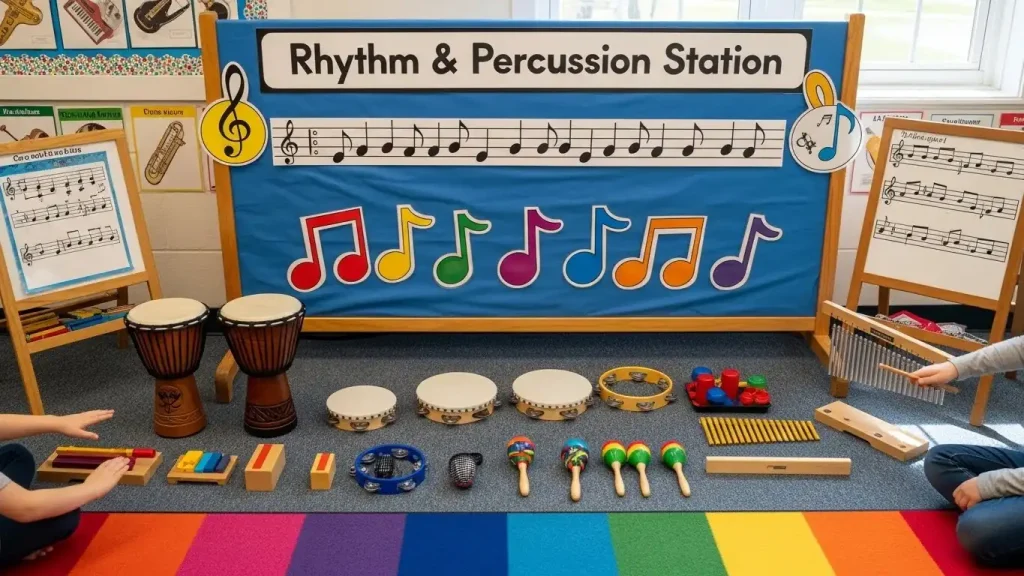
8. Rhythm and Percussion Station
A rhythm station gives students hands-on experience with drums, tambourines, and shakers. Arrange instruments on low shelves or mats so each child can reach them safely. Include simple visual guides or laminated cards with patterns to practice. Encourage students to experiment with different beats, either solo or in groups. This type of station helps develop coordination, timing, and listening skills. Placing it near open floor space allows children to move freely while keeping instruments organized. A dedicated percussion area ensures active engagement while maintaining a neat, functional classroom setup that supports creative exploration.
9. Wall Charts for Note Recognition
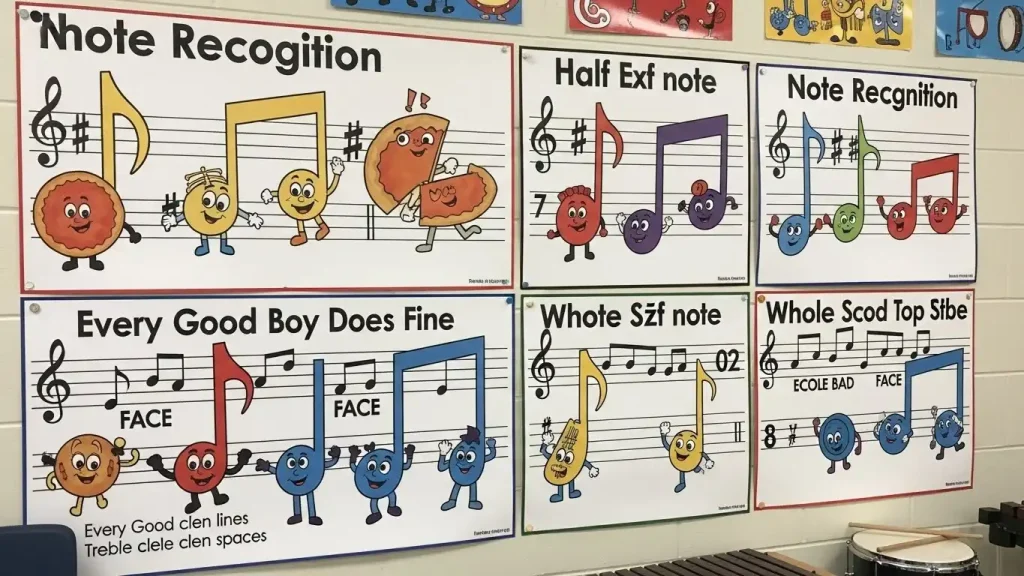
Visual aids such as wall charts help students quickly identify notes, rests, and musical symbols. Place charts at eye level and keep them colorful yet clear to avoid overwhelming learners. Combine charts with interactive elements like magnets or Velcro shapes that students can move around. This method reinforces concepts while making learning more hands-on. Update charts regularly to reflect new lessons or seasonal activities. By providing consistent visual reminders, students strengthen memory retention and confidence. Thoughtfully placed charts support independent learning and make the music room both educational and visually appealing for all students.
10. Display Student Artwork and Projects
Showcasing student work builds pride and a sense of ownership in the classroom. Use bulletin boards, cork strips, or string displays with clips to feature art, written exercises, or musical crafts. Rotate displays to highlight different students and projects over time. Encourage creativity by allowing students to add personal touches to their work. A well-curated display adds color, warmth, and personality to the music room. When students see their contributions recognized, it motivates participation, strengthens confidence, and encourages collaboration. Displaying artwork integrates learning and decor seamlessly, enhancing the overall classroom environment.

11. Comfortable Floor Space for Group Activities
Ample floor space is essential for movement-based music activities like singing, clapping, and dancing. Keep the area clear of bulky furniture and provide soft rugs or mats for comfort. Flexible seating arrangements can be moved aside during large group sessions. Use floor markers or small seating circles to organize students while keeping the space open. A well-defined floor area promotes active participation, safe movement, and clear visibility for the teacher. When students have a comfortable space to move, the music room supports both creative expression and collaborative learning, making lessons more engaging and enjoyable.

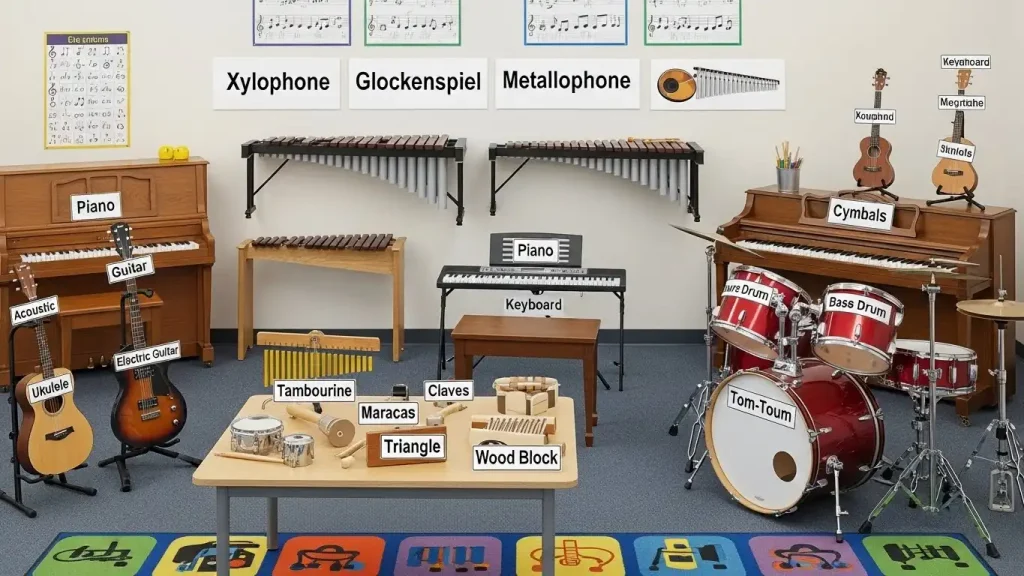
12. Musical Instrument Labels
Labeling instruments helps students identify each item and encourages responsibility. Use clear, colorful labels with both text and images to assist younger learners. Labels can be attached to shelves, bins, or individual instruments. This system makes cleanup faster and ensures that all instruments return to their designated spots. Students learn organization and care for classroom resources while developing independence. Consistent labeling across all instruments supports a tidy and structured music room. When students can easily locate and store instruments, lessons run smoothly and the space remains functional and visually appealing.
13. Wall-Mounted Storage for Sheet Music
Wall-mounted racks keep sheet music organized and accessible. Place racks at a height suitable for students to reach without difficulty. Sort sheets by topic, skill level, or activity type to simplify lesson prep. Using vertical space avoids clutter on tables or shelves. Combine racks with labeled folders or binders to make finding materials quick and easy. This setup encourages students to take responsibility for music materials while keeping the classroom neat. Well-organized sheet music supports efficient teaching and creates a visually clean, professional, and welcoming learning environment for elementary students.

14. Incorporate a Listening Station
A listening station lets students explore recorded music independently or in small groups. Include headphones, a simple audio player, and music selections appropriate for lessons or exploration. Organize the space with labeled folders or playlists to avoid confusion. Position the station near a quiet corner to reduce distractions. Encourage students to listen attentively and reflect on rhythm, melody, or instruments. A listening station develops critical listening skills and enhances understanding of different music styles. When incorporated thoughtfully, it adds variety to the classroom while keeping the room organized and engaging.

15. Add a Conductor’s Corner
A designated conductor’s area allows students to lead rhythm exercises or small ensemble activities. Provide a small podium or marked space for the conductor, along with a baton or pointer. Rotate the role among students to encourage leadership and confidence. The conductor’s corner reinforces lesson objectives like timing, coordination, and teamwork. Use floor markings or seating arrangements to maintain visibility and structure. This simple addition promotes participation and responsibility while keeping lessons interactive. A clearly defined conductor’s space helps students practice musical skills while making the classroom dynamic and engaging.

16. Storage Cubbies for Personal Items
Provide cubbies for students to store personal items like water bottles, folders, or small instruments. Label each cubby clearly with student names or photos for easy identification. Low shelves ensure accessibility for young learners. Keeping personal items organized reduces clutter and distractions during class. Encourage students to maintain their space daily, which builds habits of responsibility. Well-maintained cubbies help maintain a clean, structured music room environment. When students have dedicated storage, they can focus fully on learning while the classroom remains organized and visually appealing.

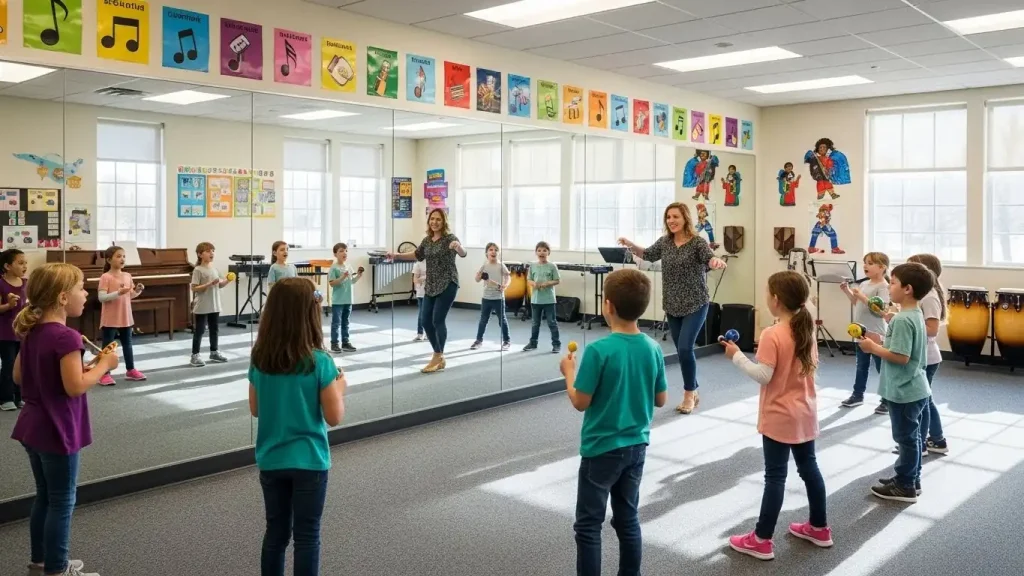
17. Incorporate Wall Mirrors for Movement Practice
Mirrors allow students to observe posture, hand movements, and performance techniques during music or movement exercises. Place mirrors along a wall at a height suitable for young learners. Mirrors support self-correction and help students understand spatial awareness. Encourage reflection on movements for rhythm exercises, dance routines, or hand signals in ensemble activities. Well-positioned mirrors make lessons more interactive and engaging while adding depth to the room. By combining mirrors with activity space, students can practice independently and develop confidence while the classroom remains functional and visually appealing.

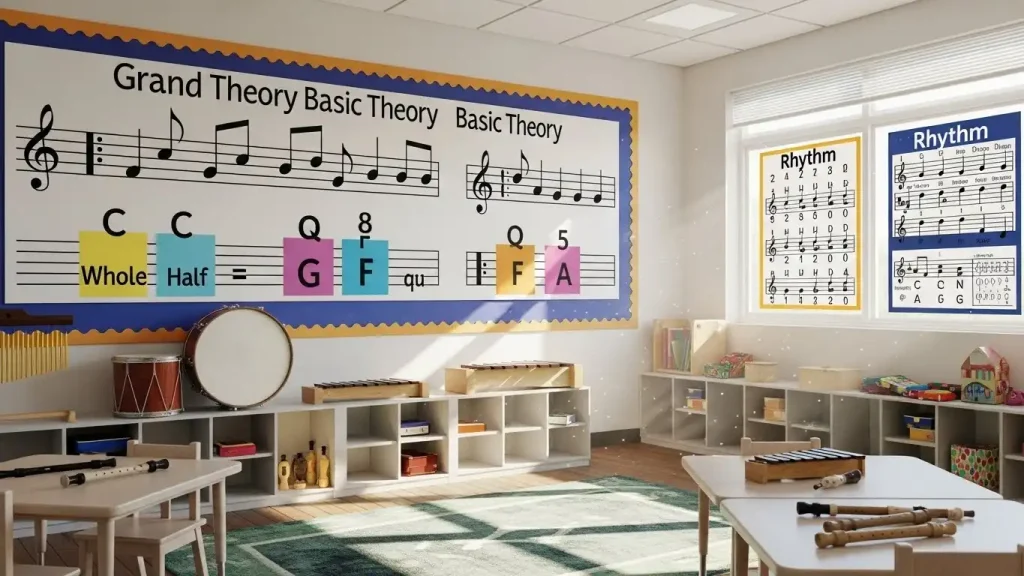
18. Display Music Theory Charts at Eye Level
Position music theory charts where students can see them easily while seated or standing. Use simple, clear visuals for notes, scales, and rhythms. Rotate charts to match lesson plans and highlight key concepts. Include interactive elements like magnetic notes or removable markers to make theory practice hands-on. When charts are easily accessible, students can reference them independently, reinforcing understanding during activities. Thoughtful placement of theory materials enhances the classroom environment, supports learning goals, and keeps the space organized, making lessons smooth, effective, and visually engaging.
19. Use Ceiling Decorations for a Musical Atmosphere
Ceiling decorations add charm and excitement to the music room. Hang colorful paper notes, small instrument replicas, or themed mobiles that match the lesson plan. These visual cues stimulate imagination and make the room feel lively. Avoid overcrowding to maintain a sense of space and prevent distractions. Lightweight, secure materials ensure safety for students. When ceiling décor complements wall displays and furniture, the music room feels cohesive and inviting. This subtle addition encourages creativity and adds energy to the classroom while enhancing the overall elementary music room decor.

20. Add a Teacher Demonstration Area
A dedicated demonstration area helps students follow instructions more easily. Place a small table, music stand, or chair where the teacher can model instrument use, hand signals, or rhythm exercises. Ensure the area is visible from all corners of the room. Keep demonstration materials organized nearby for quick access. A structured space allows students to focus on learning techniques without confusion. By providing a clear teacher area, lessons run smoothly, and students develop a stronger understanding of concepts. This setup reinforces effective teaching while maintaining an organized, functional classroom environment.

21. Create a Rhythm Wall with Visual Cues
A rhythm wall lets students practice patterns independently or in groups. Use cards, magnets, or charts to display clapping sequences, beat divisions, or rhythmic exercises. Place the wall at a height accessible for elementary students. Interactive elements like movable markers keep students engaged and allow for repeated practice. Encourage learners to match rhythms to instruments or clapping exercises. A rhythm wall reinforces timing skills, supports independent learning, and adds a fun, visual dimension to lessons. When incorporated thoughtfully, it strengthens student understanding while keeping the music room organized and interactive.

22. Incorporate a Technology Corner
A small technology area enhances learning with audio players, tablets, or music apps. Use child-safe, sturdy furniture and secure cords to prevent accidents. Organize devices in labeled bins or trays for easy access and storage. Technology can support listening activities, digital instruments, or interactive music games. Position the corner to avoid disruption of group lessons and traffic flow. A dedicated technology space blends traditional and modern learning tools while keeping the classroom organized. This addition engages students in diverse ways, reinforces lesson objectives, and supports an innovative elementary music room decor approach.

23. Label Storage Areas Clearly
Clear labeling promotes independence and organization. Use labels with text and images on bins, shelves, and instrument racks. This helps younger students identify materials quickly and return items after use. Consistent labeling reduces confusion and clutter during lessons. Consider color-coding by instrument type or activity area to create visual cues. When labeling is integrated across all storage areas, the music room remains tidy and functional. Students develop responsibility and spatial awareness, while teachers spend less time searching for materials. Well-labeled storage supports smooth transitions and efficient classroom management.

24. Include a Performance Stage Corner
A small corner for mini performances encourages confidence and creativity. Use a low platform, carpeted area, or marked space for students to perform in front of peers. This helps develop stage presence, musical expression, and collaboration skills. Arrange seating to give all students a clear view without blocking movement. Rotate performers to allow everyone participation. A performance corner motivates learners while keeping the space functional for regular lessons. Integrating this area enriches the elementary music room decor by combining creativity, engagement, and organization in one practical, inspiring zone.

25. Incorporate Mirrors for Posture and Movement
Mirrors help students monitor posture and hand positions while playing instruments or performing. Install mirrors at eye level for easy visibility. Encourage learners to observe themselves during rhythm exercises, dance movements, or conducting practice. Mirrors improve spatial awareness, coordination, and self-confidence. Place them strategically to avoid reflections that distract from other areas. Using mirrors enhances student engagement while maintaining a visually appealing classroom. When combined with open floor space, mirrors support both movement and focus, making lessons interactive and fun in a well-organized music environment.
26. Seasonal and Themed Decor
Decorate according to seasons, holidays, or special music events to keep the classroom exciting. Rotate posters, banners, or wall displays to align with topics or celebrations. Seasonal touches can include themed instruments, student art, or interactive elements that reflect current lessons. Updating the room periodically maintains interest and encourages participation. Keep decorations age-appropriate and safe for children. Thoughtful, rotating decor adds variety without cluttering the space. Seasonal and themed updates make the music room feel dynamic and welcoming while enhancing learning experiences and maintaining a structured, visually pleasing environment.

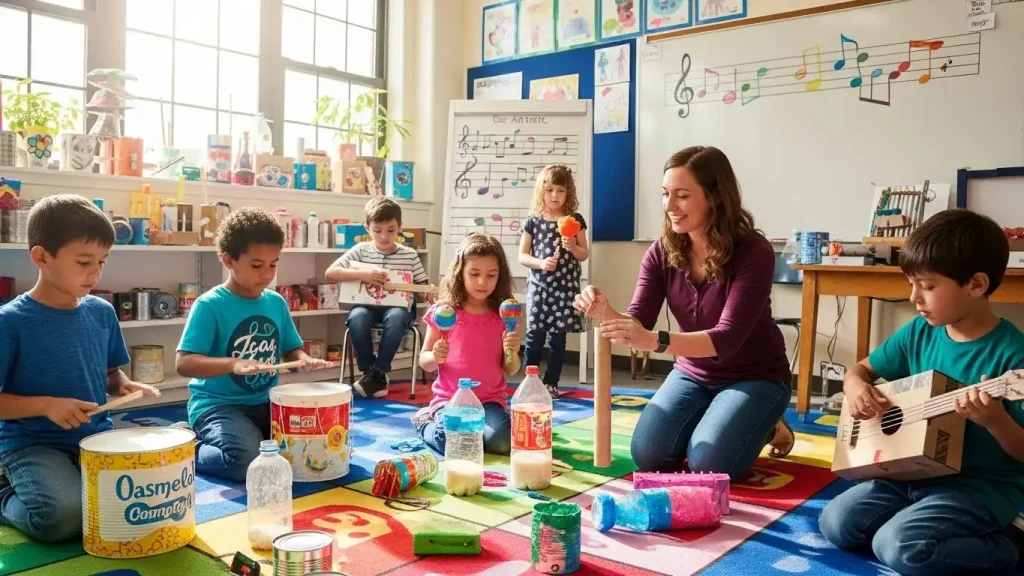
27. Include Student-Created Instruments
Student-made instruments add a creative and personal touch to the classroom. Use recycled materials or simple craft supplies to build drums, shakers, or stringed instruments. Display these creations on low shelves or wall-mounted racks for easy access. Encourage students to use their instruments during lessons to promote engagement and pride. This activity teaches craftsmanship, responsibility, and teamwork while integrating hands-on music learning. A collection of student-made instruments adds character, supports interactive lessons, and strengthens the elementary music room decor with creativity and participation at the center.
28. Use Storage Bins for Small Accessories
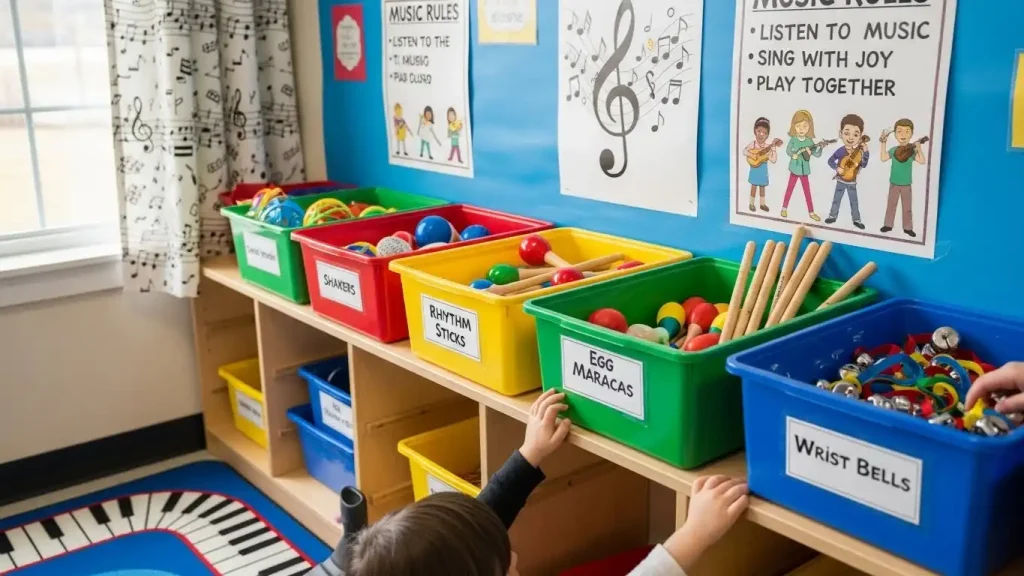
Small items like mallets, rhythm sticks, and hand bells can easily get lost. Store them in labeled bins or trays for organized access. Clear containers or color-coded bins help students identify items quickly. Keep the bins on low shelves for safety and convenience. Encourage students to return accessories after use to reinforce responsibility. Well-managed bins maintain a tidy classroom and prevent distractions caused by searching for materials. By organizing small items effectively, lessons run smoothly, and the music room stays visually clean and structured, supporting both teaching and learning.
29. Create a Quiet Reflection Area
A quiet corner allows students to relax, reflect, or listen attentively to music. Add comfortable seating, cushions, or small rugs to define the space. Include calming visual elements like posters, soft lighting, or simple instruments for exploration. This area encourages independent learning, emotional regulation, and mindfulness. Position the reflection corner away from active stations to maintain focus and reduce noise distractions. Incorporating a peaceful space balances the classroom energy, supports different learning needs, and enhances the overall elementary music room decor by creating a versatile and inviting learning environment.

Conclusion
A thoughtfully designed elementary music room decor combines organization, creativity, and engagement. Using color, interactive stations, flexible seating, and organized storage encourages students to participate and explore music with confidence. Every zone, from rhythm corners to reflection areas, serves a purpose while maintaining a cohesive and welcoming environment. Seasonal touches, student-made instruments, and clear visual aids enrich the learning experience. By carefully planning the space, teachers create an inspiring classroom where young learners can develop musical skills, build confidence, and enjoy every lesson. These 29 ideas help craft a functional, visually appealing, and joyful music room.
FAQs
1. How can I make a music room more engaging for elementary students?
Use bright colors, interactive stations, flexible seating, and hands-on instruments to create an environment that encourages participation and creativity.
2. What’s the best way to organize instruments in a classroom?
Label bins, cubbies, and shelves clearly. Keep instruments accessible at child-friendly heights and encourage students to return items after use.
3. How can I separate zones without walls?
Use rugs, furniture placement, floor markers, and bulletin boards to define learning areas, activity corners, and reflection spaces within the open room.
4. How do I incorporate seasonal or thematic decor effectively?
Rotate posters, banners, or interactive displays to match lessons, holidays, or music events. Keep decorations safe, organized, and age-appropriate.
5. How can I support both active and quiet learning?
Create dedicated spaces for movement-based activities like rhythm or dance, as well as quiet corners for reflection, listening, and independent exploration.
Visit More Ideas : www.dreamyhomesdecor.com