
20 Home Music Rooms
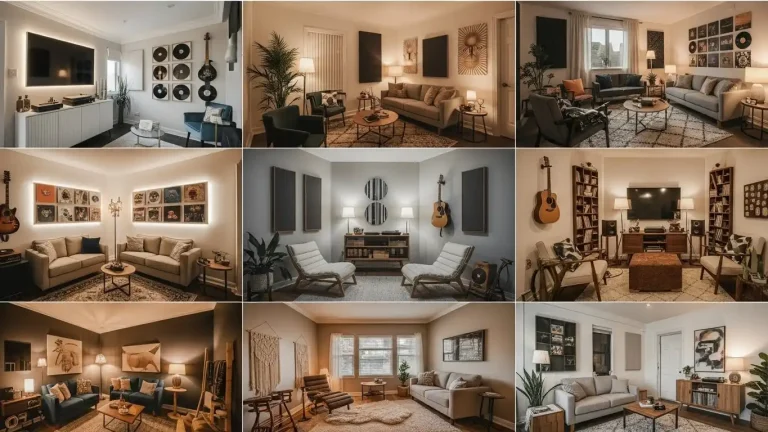
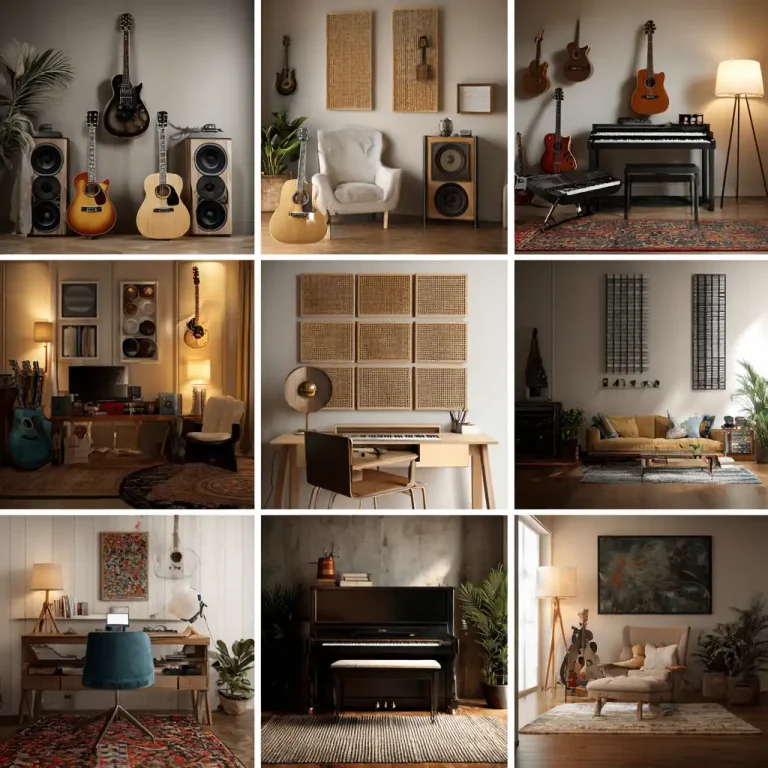
A home music room is more than just a space for instruments—it’s a sanctuary for creativity, relaxation, and entertainment. Designing the perfect music room requires careful consideration of acoustics, layout, and décor to inspire practice and performance. From dedicated studios to cozy listening corners, music rooms can reflect your personal style while meeting functional needs. Acoustic panels, soundproofing, lighting, and furniture all play crucial roles in creating a comfortable and inspiring environment. Whether you’re a musician, audiophile, or simply enjoy entertaining with live music, a thoughtfully designed home music room enhances both your lifestyle and your home’s value. This article explores 20 home music room ideas, offering inspiration for various sizes, styles, and purposes, helping you create a space where music truly comes alive.
1. Dedicated Recording Studio
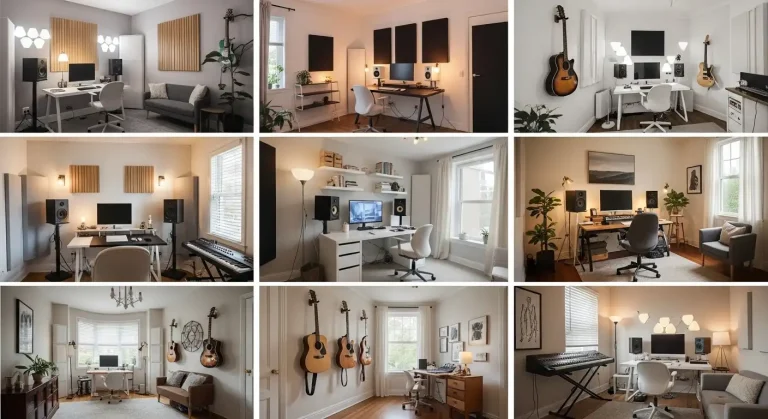
A dedicated recording studio provides an ideal environment for musicians and producers. Soundproof walls, acoustic panels, and bass traps ensure optimal sound quality. Adjustable lighting and ergonomic furniture create comfort for long sessions. Equipment storage and cable management maintain organization, preventing clutter. This setup allows for professional-quality recordings at home, combining functionality with inspiration. A well-planned studio becomes a hub for creativity, offering both a practical workspace and a visually appealing room for music enthusiasts.

2. Cozy Acoustic Lounge
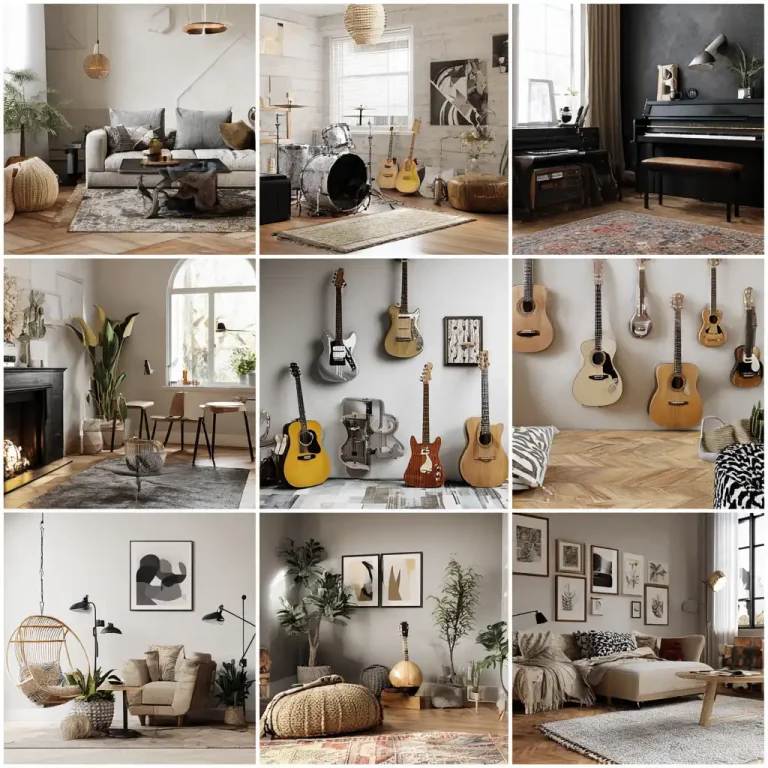
A cozy acoustic lounge emphasizes comfort and intimacy. Soft seating, area rugs, and heavy curtains improve acoustics while creating a warm atmosphere. Small instruments like guitars, keyboards, or percussion can be easily stored. This space is perfect for casual practice, small jam sessions, or relaxed listening. Acoustic treatments ensure sound quality without overwhelming the room. A cozy lounge encourages creativity while offering a relaxing environment that blends style and function.

3. Multi-Instrument Music Room
Multi-instrument rooms accommodate various instruments such as pianos, guitars, drums, and synthesizers. Proper layout and spacing prevent interference between instruments while maintaining accessibility. Acoustic panels and rugs help control sound. Storage solutions like stands, racks, and shelving keep instruments organized. This type of room suits families or households with multiple musicians, allowing collaborative practice and easy instrument rotation. A well-designed multi-instrument room balances functionality, sound quality, and aesthetic appeal.

4. Minimalist Music Room
Minimalist music rooms focus on clean lines, uncluttered spaces, and simple décor. Essential instruments and equipment are prioritized, while decorative elements are limited. Neutral color palettes enhance focus and create a calming atmosphere. Minimalist designs reduce distractions and make practice sessions more productive. Acoustic panels and subtle lighting maintain sound quality and mood. This approach combines functionality with style, making the music room both efficient and visually appealing.

5. Home Piano Room
A dedicated piano room showcases a grand or upright piano as the centerpiece. Acoustic treatments, curtains, and rugs improve sound quality. Comfortable seating for practice or guests enhances functionality. Lighting positioned above the piano ensures clear visibility for sheet music. This setup emphasizes elegance and musicality, creating a room that’s inviting for both practice and performance.

6. Recording and Mixing Corner
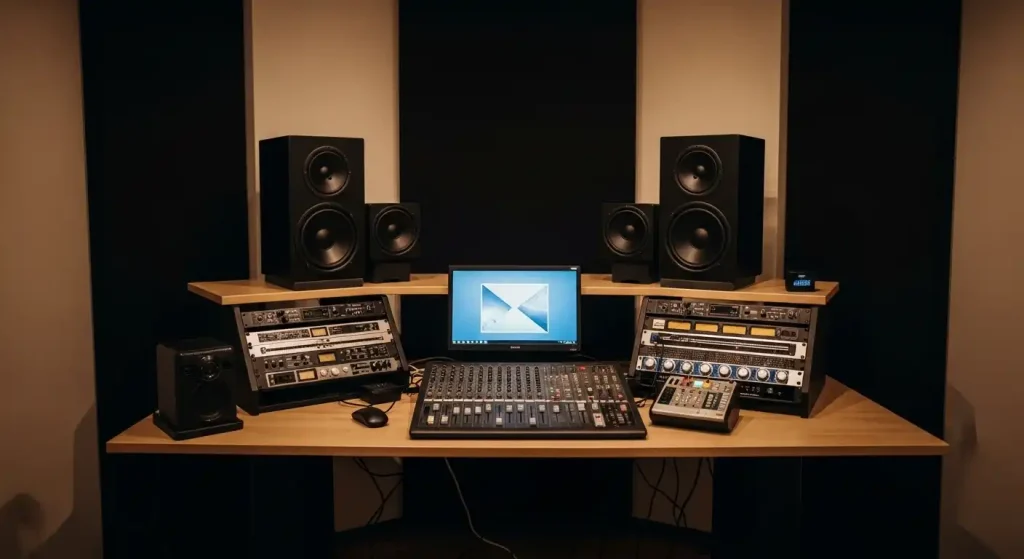
A dedicated recording and mixing corner allows musicians to produce high-quality audio at home. Compact mixing desks, studio monitors, and audio interfaces create a professional environment in limited space. Acoustic panels, bass traps, and soundproofing ensure clarity and prevent sound leakage. Organizing cables and equipment efficiently keeps the area tidy and functional. This setup suits musicians who want to track, edit, and mix their work at home while maintaining a visually appealing and productive space. Proper lighting and ergonomic seating enhance comfort during long recording sessions.
7. Soundproofed Practice Room
A soundproofed practice room is essential for avoiding noise disturbance in multi-level homes or apartments. Walls lined with acoustic panels, carpets, and heavy curtains reduce echoes and absorb excess sound. Door seals and double-glass windows further isolate noise. This room allows for focused practice on any instrument, from drums to electric guitars, without worrying about disturbing others. Soundproofing ensures that musicians can experiment freely while maintaining a peaceful environment elsewhere in the house.

8. Vintage Music Room
Vintage music rooms celebrate nostalgia with retro instruments, vinyl records, and classic décor. Antique pianos, gramophones, and wooden racks for sheet music enhance charm. Warm-toned lighting and wooden accents create a cozy, timeless atmosphere. This style combines aesthetics with functionality, offering both a visually appealing space and a comfortable practice environment. It’s perfect for music lovers who appreciate history and want their home studio to feel unique and inviting.

9. Small Corner Music Nook
A small corner nook can be transformed into an efficient music space without taking over an entire room. Compact instruments, foldable seating, and wall-mounted shelves optimize limited space. Acoustic panels or rugs can control sound, ensuring quality practice sessions. This setup is ideal for apartments or homes with minimal extra rooms. A music nook allows enthusiasts to practice regularly while keeping the room tidy and organized, proving that size doesn’t limit creativity.

10. Multi-Purpose Music and Lounge Room
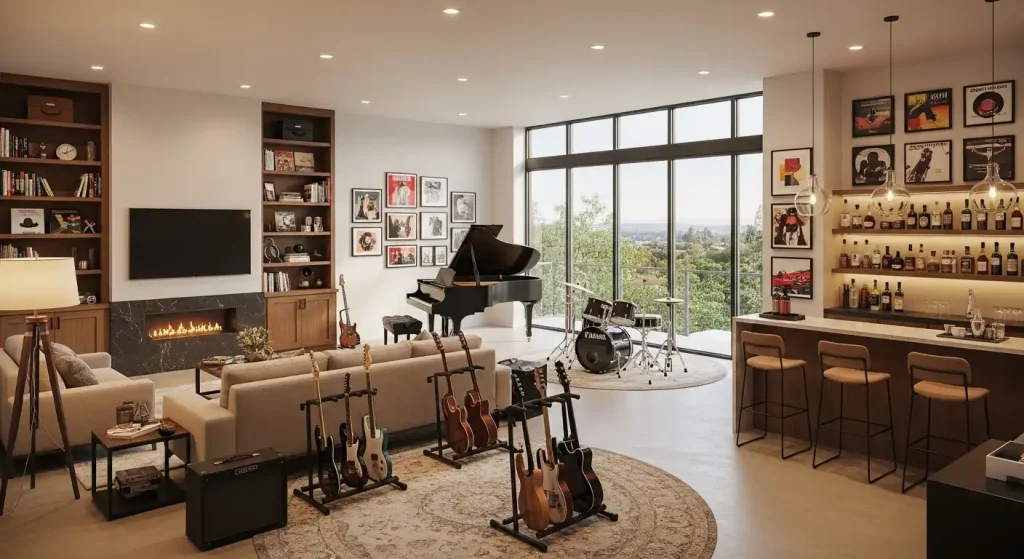
Combining a music room with a lounge area creates a space for both practice and entertainment. Comfortable sofas, low lighting, and decorative elements like rugs or artwork provide relaxation. Musical instruments are arranged for easy access, while storage solutions keep equipment organized. This layout encourages casual jam sessions, listening parties, or solitary practice, blending social and creative functions. A multi-purpose room maximizes space utility while maintaining a stylish, welcoming environment.
11. Home Studio with Digital Instruments
Digital instruments like keyboards, MIDI controllers, and electronic drum kits allow modern music production in compact spaces. Pairing them with a computer or tablet setup enables recording, editing, and composing. Acoustic foam panels and adjustable lighting optimize both sound quality and ambiance. Digital setups offer versatility without requiring large spaces, making them perfect for electronic music producers or hobbyists. Proper cable management and ergonomic seating enhance functionality.

12. Music Room with Wall Storage
Wall-mounted storage keeps instruments, sheet music, and accessories organized while maximizing floor space. Floating shelves, racks, and hooks ensure items are easily accessible and visually displayed. This method maintains an uncluttered, clean look while providing functionality for multi-instrument households. Wall storage also adds decorative appeal, allowing instruments or vintage items to double as décor. A well-organized music room inspires creativity while keeping the space visually appealing and efficient.

13. Cozy Acoustic Corner
Creating a cozy acoustic corner involves soft furnishings, rugs, and wall panels to enhance sound and comfort. Bean bags, cushioned chairs, and small rugs create a relaxing seating area for practice or listening. Acoustic treatments improve clarity and reduce echoes, making the space perfect for solo musicians or small group sessions. This intimate setup allows for focused practice while maintaining a warm, inviting vibe, ideal for casual jam sessions or relaxation.

14. Modern Minimalist Music Room
A modern minimalist music room emphasizes simplicity and efficiency. Clean lines, neutral colors, and uncluttered surfaces create a focused environment. Essential instruments are prioritized, while decorative elements are limited to functional or inspirational items. Acoustic panels and proper lighting maintain sound quality and comfort. Minimalist design reduces distractions, allowing musicians to focus on practice and creativity while ensuring the space remains stylish and contemporary.

15. Home Music Room with Natural Lighting
Natural lighting enhances both the ambiance and mood of a music room. Large windows, skylights, or glass doors bring in sunlight while highlighting instruments and décor. Light-colored walls and reflective surfaces amplify brightness, creating an inviting and uplifting environment. Natural lighting also reduces eye strain during reading of sheet music. Pairing sunlight with adjustable curtains or blinds ensures control over brightness, maintaining optimal conditions for practice and performance.

16. Multi-Level Music Studio
A multi-level music studio separates instruments, recording equipment, and seating areas across different zones. This layout allows simultaneous use of drums, keyboards, and other instruments without interference. Soundproofing and acoustic treatments are essential to maintain clarity. Multi-level designs maximize space, improve workflow, and provide distinct areas for creativity and relaxation. This setup is ideal for families, bands, or music enthusiasts who require organized, versatile spaces for multiple activities.

17. Music Room with Performance Area
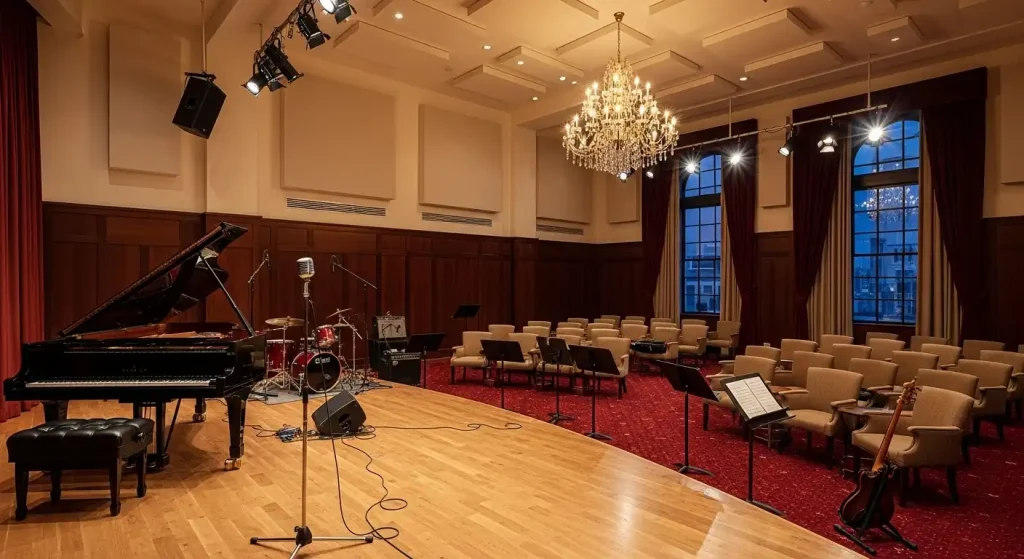
Creating a small performance area within a music room allows for informal concerts or practice sessions with an audience. A slightly raised platform or designated corner accommodates performers. Seating like stools or benches can be arranged for listeners. Lighting, acoustic treatments, and instrument placement ensure quality sound and visual appeal. This design encourages live practice, teaching, or entertainment while maintaining the room’s overall aesthetic.
18. Music Room with Recording Booth
A recording booth enhances professional-quality audio in a home setup. Enclosed with soundproof panels and equipped with microphones and monitoring equipment, it isolates sound for clear recordings. Integrated ventilation and proper lighting ensure comfort during long sessions. Recording booths are perfect for singers, podcasters, or musicians who require studio-quality sound without leaving the home. This addition makes a music room both functional and versatile.

19. Rustic-Style Music Room
Rustic music rooms use wooden floors, exposed beams, and earthy tones to create a cozy, natural ambiance. Instruments like acoustic guitars, pianos, and violins complement the aesthetic. Soft furnishings and rugs enhance warmth while improving acoustics. Rustic designs evoke charm and comfort, making the room a welcoming retreat for practice, recording, or relaxation. This style combines aesthetics, functionality, and a homely feel.

20. Multi-Purpose Music and Entertainment Room
A multi-purpose room combines music practice with entertainment, such as movie viewing or gaming. Flexible seating, modular furniture, and proper acoustic treatments allow smooth transitions between activities. Instruments are stored efficiently for quick access. Lighting, sound systems, and décor balance functionality and style. This approach maximizes the utility of the room while maintaining a creative and enjoyable environment for the whole family.

Conclusion
A home music room is an essential space for creativity, relaxation, and entertainment. From professional recording studios to cozy acoustic corners, these 20 home music room ideas combine functionality, style, and comfort. Proper use of acoustic treatments, lighting, storage, and décor ensures every room inspires musical expression. Whether you prefer modern minimalism, rustic charm, or a multi-instrument setup, thoughtful design transforms any home into a sanctuary for music. Investing in a well-designed music room enhances both the lifestyle and value of your home, creating an environment where creativity and enjoyment flourish.
5 FAQs About Home Music Rooms
1. How do I soundproof a music room effectively?
Use acoustic panels, carpets, heavy curtains, and double-glass windows to reduce noise and control echoes.
2. What is the best flooring for a music room?
Hardwood, laminate, or carpeted floors work depending on acoustic needs and instrument types.
3. How can I make a small room ideal for music practice?
Optimize layout, use wall-mounted storage, compact instruments, and acoustic treatments to maximize space and sound quality.
4. Can I combine a music room with other functions?
Yes, multi-purpose layouts allow music practice alongside lounge areas, entertainment zones, or small recording setups.
5. What lighting works best in a music room?
A combination of natural light, adjustable task lighting, and ambient lights enhances visibility, comfort, and mood.
Visit More Ideas : www.dreamyhomesdecor.com