
19 Creative Music Room Ideas
Creating a music room that feels inspiring, comfortable, and fully functional elevates your daily routine and sparks creativity every time you walk in. Whether you play instruments, produce music, or simply enjoy listening, a well-designed music room transforms your home into a personal sanctuary. The right mix of décor, sound control, lighting, and organization helps you stay focused and enjoy long practice sessions without distractions. Thoughtful details such as wall displays, layered textures, cozy seating, and custom storage make the room visually appealing and effortlessly organized. This collection of 19 creative music room ideas guides you through different ways to build a space that reflects your personality and supports your musical lifestyle. Each idea offers clear inspiration, helping you design a room that feels warm, expressive, and inviting. With these ideas, you can shape a music room that balances beauty, comfort, and performance, turning your creative space into a daily source of motivation.
1. Designing a visually engaging music room with personalized wall art and expressive displays
A creative music room starts with walls that reflect your musical identity. Large frames, floating shelves, and themed artwork build personality and set the tone for your space. Displaying posters, concert tickets, vinyl covers, or even handwritten lyrics gives the room a warm and sentimental feeling. Mixing textures such as canvas prints, wooden frames, or metal accents adds depth and interest. Creating a gallery wall behind your main instrument anchors the room visually and establishes a strong focal point.

2. Creating functional storage zones that organize instruments and support smooth practice sessions
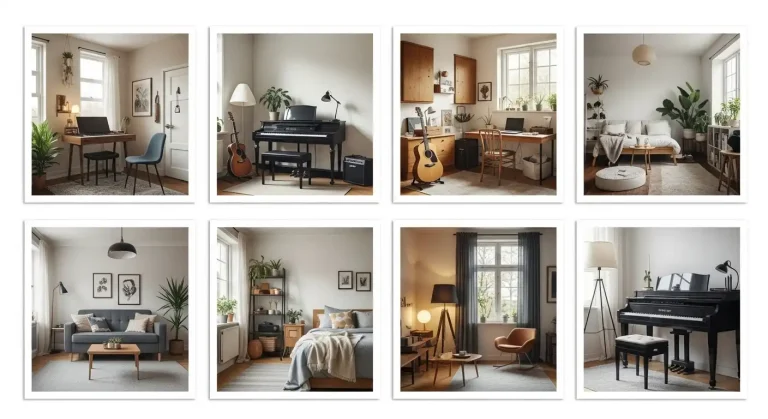
Instruments need strategic placement to keep the room tidy and easy to use. Wall-mounted racks, pegboards, and open shelving offer convenient access while keeping the floor clear. A dedicated zone for cables, pedals, stands, and accessories prevents clutter and ensures quick setup for practice or recording. Transparent bins, labeled drawers, or modular shelves help you find everything instantly, improving your workflow and maintaining a clean, polished look.

3. Setting up comfortable seating areas that support long practice sessions and relaxed listening time
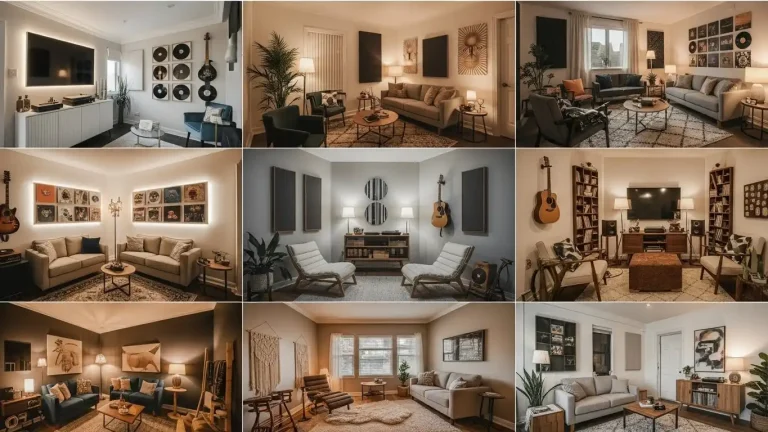
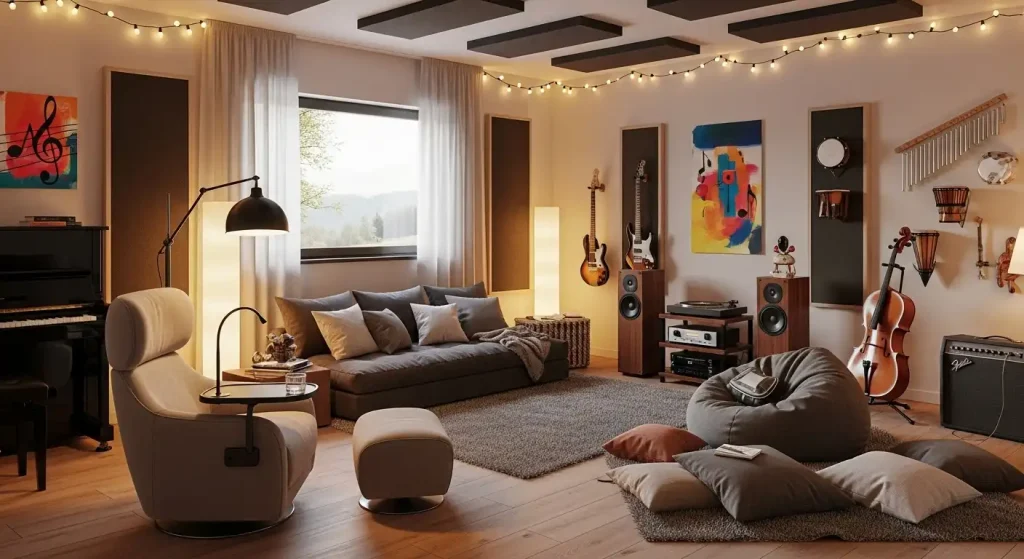
A well-designed seating area makes the room more inviting. A soft armchair, cushioned bench, or compact sofa gives you a comfortable spot to reflect, listen, or review sheet music. Adding throw blankets, textured cushions, and a small side table enhances the cozy atmosphere. Positioning the seating near natural light or beside your instrument creates a relaxing nook that encourages daily practice and inspires creativity.
4. Using layered lighting to highlight instruments and create mood for practice, recording, and relaxation
Good lighting enhances both performance and ambiance. Warm overhead lights, adjustable lamps, and subtle LED accents work together to brighten different zones. Directed lighting near your main instrument improves visibility, while soft mood lights create a relaxing environment for late-night sessions. Mixed lighting layers make the room visually dynamic and help you shift smoothly between focused practice and calm listening.

5. Create an inspiring practice corner that blends comfort with creative energy
A dedicated practice corner helps build focus and routine. Choose a quiet section of the room and set up a comfortable chair, an adjustable music stand, and soft lighting that reduces eye strain during long sessions. Add a small side table to keep rosin, tuners, capos, or headphones within reach. Wall décor like minimal art, framed notes, or calming prints can shape the mood of the space. You can also place a floor rug to visually anchor the corner while helping soften the acoustics. By designing this area with intention, you encourage daily practice that feels calming and enjoyable rather than routine and tiring.

6. Use floating shelves to display instruments and beautifully organize accessories
Floating shelves are ideal for storing and showcasing instruments while keeping the room neat. Guitars, ukuleles, small percussion items, or record collections fit perfectly on sturdy shelves that add height and interest to the walls. Mixing functional items with décor—like small plants, candles, or framed photos—makes the display personal and stylish. Shelves also free up floor space, making the room feel larger and easier to navigate. Consider arranging items by size or theme to maintain a visually pleasing layout. This simple upgrade adds personality and offers convenient access to frequently used music essentials.

7. Add a minimalist workstation for recording, editing, and digital composition
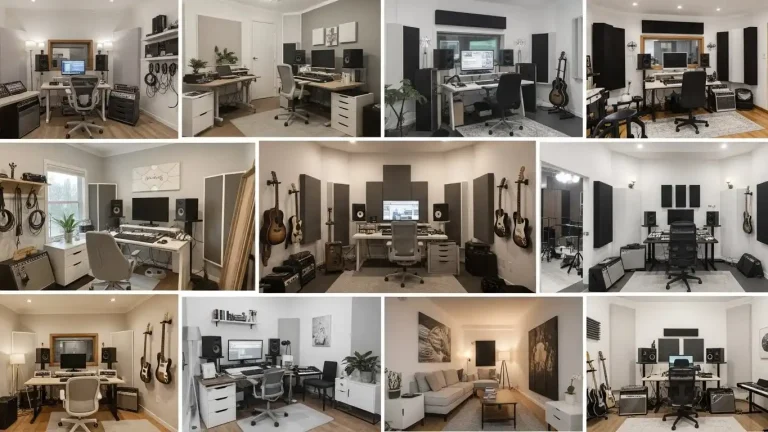
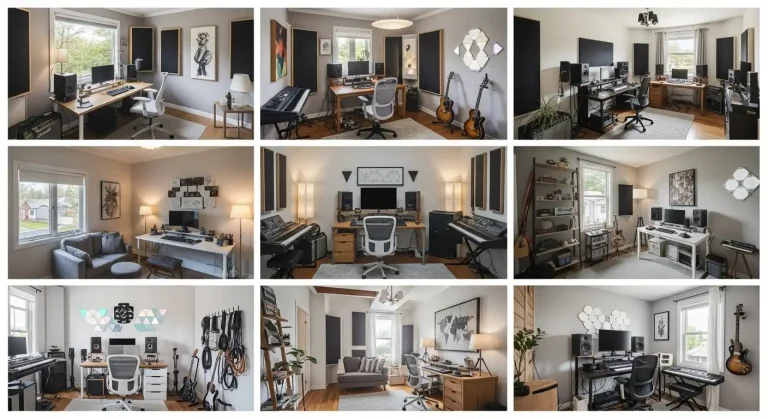
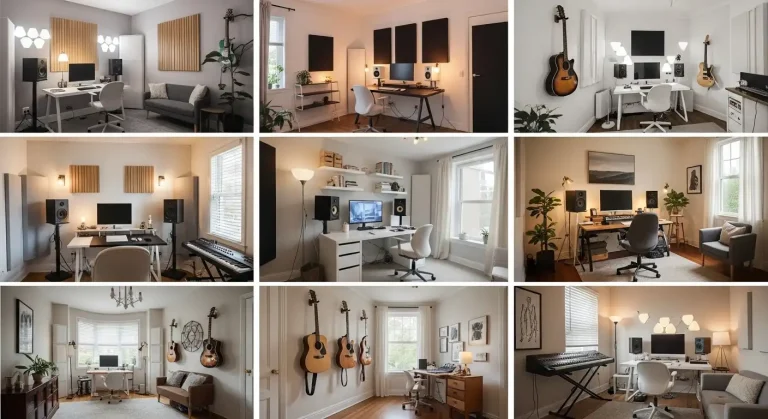
A clean workstation helps musicians stay organized and productive. Choose a compact desk with enough surface area for a laptop, MIDI keyboard, audio interface, and essential equipment. Cable organizers or under-desk trays prevent clutter and maintain a polished look. Pair the desk with an ergonomic chair to support comfortable long sessions. Adding soft desk lighting sets a focused tone, while acoustic panels around the workstation help improve sound quality for recording or mixing. This setup supports creativity for producers, composers, and students who rely on digital tools as part of their music routine.

8. Create a Stylish Music Corner With Layered Textures and Warm Accents
Layered textures give a music corner a welcoming and creative feel. Use a soft rug beneath your main instrument, add woven baskets for storing cables or accessories, and place a cozy throw on your practice chair. Combine wood tones, fabric textures, and subtle metal accents to bring depth and comfort. This layered look improves the acoustics while giving your space a warm, lived-in personality. The blend of textures helps create a zone that feels relaxing, inspiring, and ready for long practice sessions.

9. Display Instruments on Walls to Add Function and a Beautiful Artistic Touch
Wall-mounted displays turn instruments into decorative art while keeping the space organized. Mount guitars, violins, ukuleles, or brass pieces in neat rows or a creative pattern that fits your wall size. This approach keeps instruments within reach and frees up floor area for seating or equipment. Choose sleek mounts or wooden hangers that match your décor style. The wall display becomes a focal point that reflects your music journey and personal taste.

10. Add Ambient Lighting to Create Mood and Improve Practice Sessions
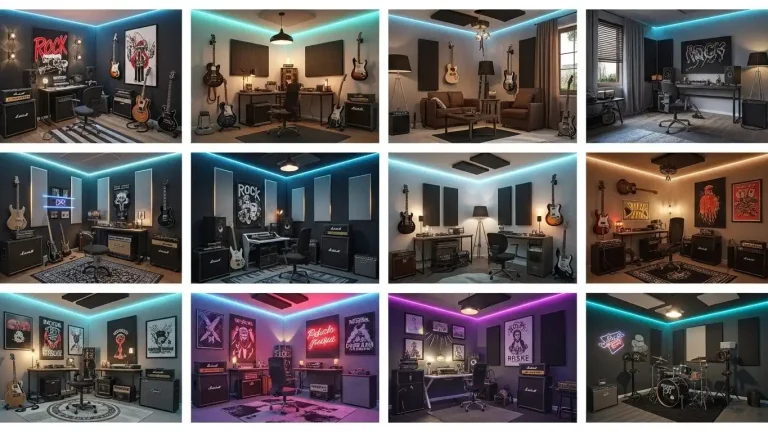
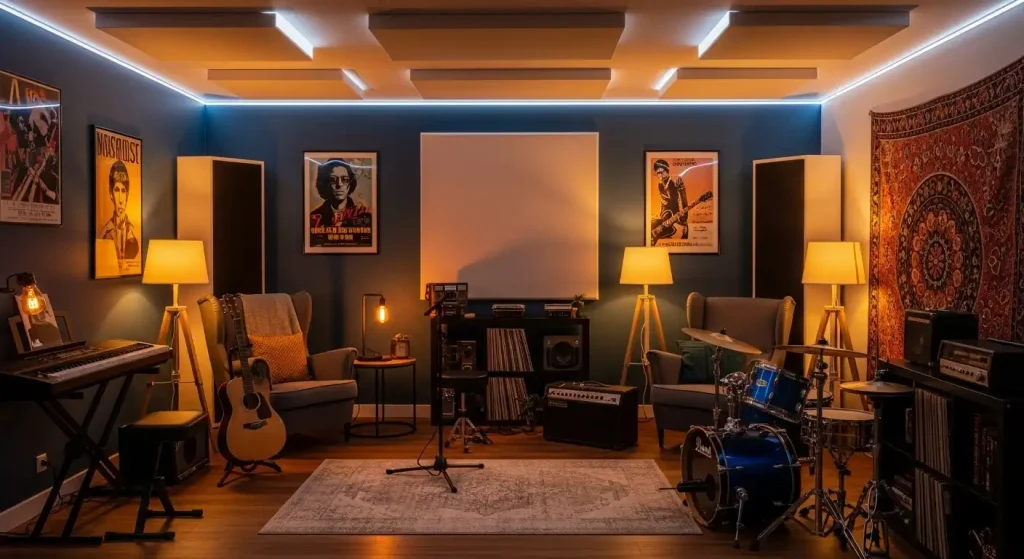
Ambient lighting elevates the energy of a music room. Use LED strips around shelves, soft lamps beside your main instrument, or overhead lights with dimmers. Adjustable warmth lets you switch between focused practice lighting and gentle mood lighting for relaxing or jamming with friends. Soft lighting also highlights instruments and décor, making the room visually appealing. The right lighting can completely shape the emotion and flow of your creative time.
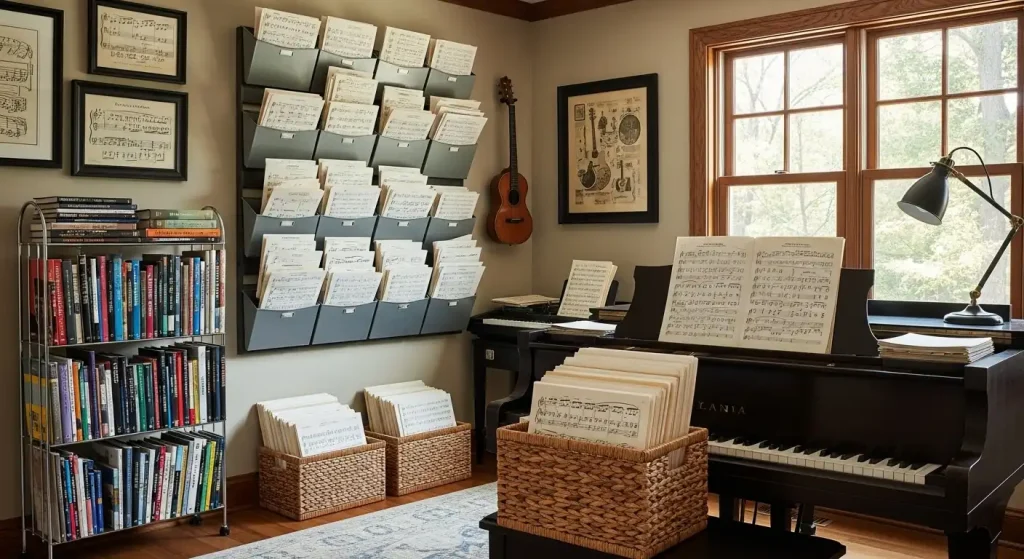
11. Organize Sheet Music With Stylish Baskets, Racks, and Wall Files
A tidy room supports better creativity, so keep sheet music organized with attractive storage solutions. Use woven baskets for loose sheets, metal racks for books, and wall organizers for frequently used materials. This system keeps everything easy to find and adds structure to your room layout. Match your storage pieces to the room’s style—wooden bins for rustic themes or sleek metal for modern décor. Organized music materials keep your sessions smooth and stress-free.
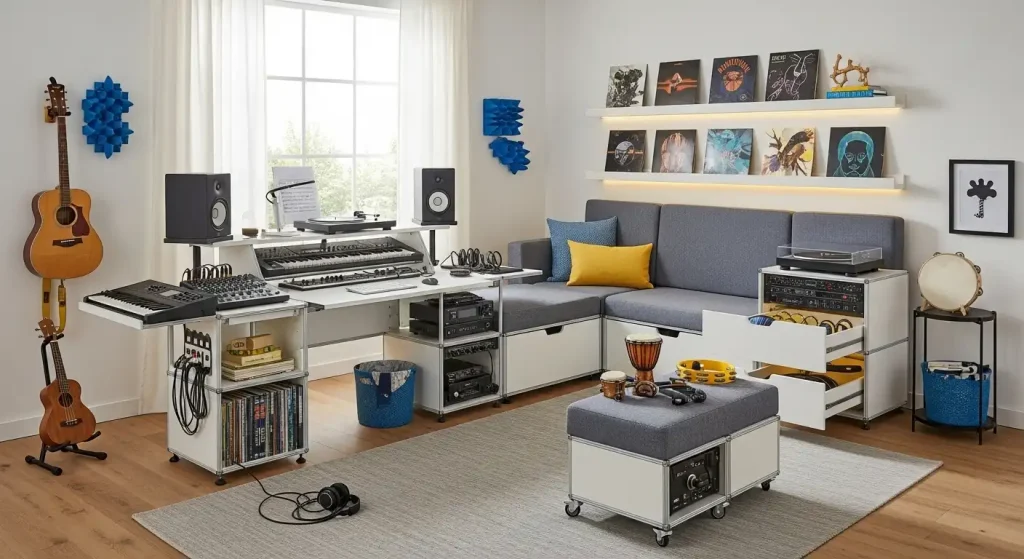
12. Use Multi-Purpose Furniture to Maximize Space and Keep Room Clutter-Free
Compact rooms benefit from furniture that serves multiple purposes. Use benches with storage, foldable stands, or ottomans that double as seating and storage. A multi-functional desk can hold recording gear, laptops, and accessories without overwhelming the space. This approach saves room while adding convenience and style. Thoughtful furniture choices help keep clutter under control and give the room a clean, cohesive look that enhances creative focus.
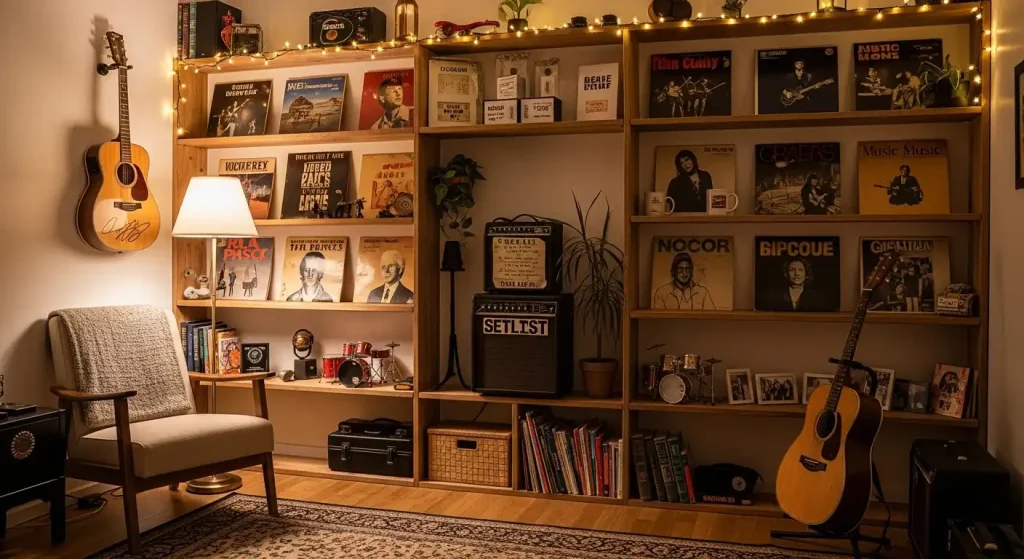
13. Add Personal Memorabilia Shelves to Celebrate Your Musical Journey
Shelves dedicated to personal music memories add character and meaning to the room. Display concert tickets, old instruments, music awards, photos, or handwritten lyrics. These items bring emotional value and make your room feel like a reflection of your growth. Pair these pieces with small décor items like candles, plants, or small sculptures to create a balanced display. Your music room becomes a space filled with stories, passion, and inspiration.

14. Cozy Corners for Listening and Reflection
Create a small corner with a comfortable chair, soft lighting, and a side table for notebooks or headphones. This space is perfect for listening, relaxing, or composing music in a calm, focused environment. Layered textures, such as plush rugs, cushions, and throws, make the area inviting. A cozy corner provides a balance to the active practice areas, allowing musicians to recharge and find inspiration.

15. Smart Technology Integration
Modern music rooms benefit from smart technology. Use Bluetooth speakers, smart lighting, or automated recording setups to streamline workflow. Integrating devices with voice assistants or apps makes practice and recording more efficient. Smart systems can adjust lighting, control sound levels, and organize playlists, creating a seamless, tech-savvy music environment. These additions enhance both functionality and enjoyment in your creative space.

16. Wall-Mounted Organizers for Sheet Music and Accessories
Keep your sheet music, headphones, cables, and small instruments organized using wall-mounted organizers or pegboards. This method saves floor space and ensures essentials are always accessible. Organizers can be customized to fit the room’s style, from sleek modern panels to rustic wooden racks. Effective storage keeps the music room tidy, reduces clutter, and supports a productive and creative workflow.

17. Decorative Touches and Musical Accents
Add small decorative elements like miniature instruments, framed lyrics, or artistic figurines. Use textures such as metallic accents, wood finishes, or fabric wall hangings to create visual depth. Musical accents make the space feel personalized and inspiring. Layered décor combines function with aesthetics, transforming your music room into a place where creativity and style coexist seamlessly.

18. Plants and Natural Elements for Freshness and Calm
Incorporate greenery or small indoor plants to add freshness and reduce stress. Plants also improve air quality and provide a soothing contrast to electronics and instruments. Use decorative pots or hanging planters that complement the room’s color palette. Natural elements bring balance, warmth, and a touch of life to the music room, enhancing creativity and comfort.
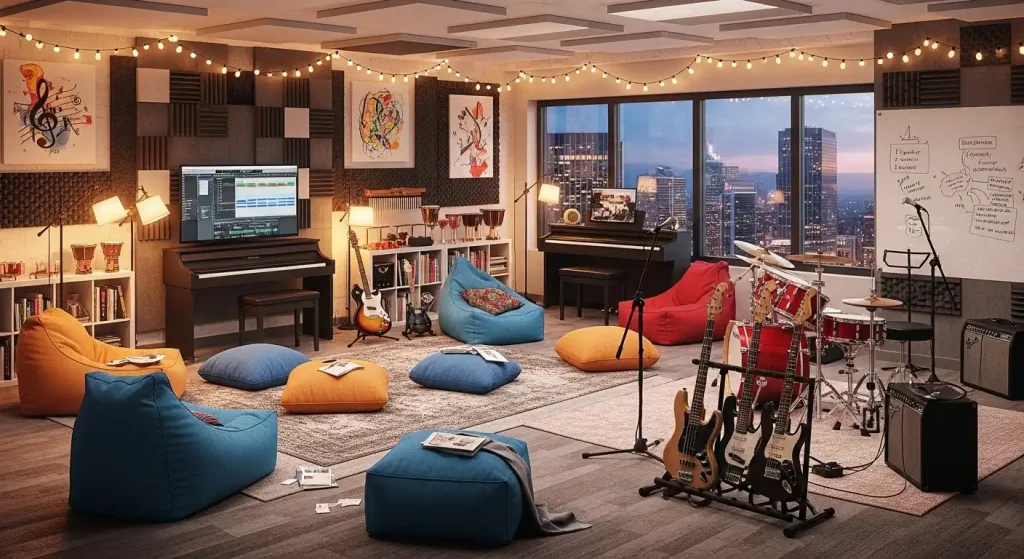
19. Flexible Layouts for Collaboration and Jam Sessions
Design your music room to accommodate solo practice and collaborative sessions. Arrange instruments, seating, and workspaces to allow easy movement and communication. Use modular furniture that can be moved or reconfigured for different needs. A flexible layout encourages experimentation, group playing, and recording, making the space versatile for multiple creative uses.
Conclusion:
A creative music room is a blend of functionality, style, and personal expression. From acoustic treatments and instrument displays to cozy corners, tech integration, and decorative accents, these 19 Creative Music Room Ideas provide inspiration to design a space that motivates practice, encourages collaboration, and reflects your personality. Thoughtful planning and careful design ensure that your music room is not only a practical space for playing and recording but also an inviting, inspiring sanctuary where music truly comes alive.
5 FAQs
1. How can I make my music room both functional and stylish?
Use a mix of acoustic treatments, ergonomic furniture, decorative accents, and organized storage while maintaining a cohesive color palette.
2. What is the best way to display instruments?
Wall-mounted racks or freestanding stands highlight instruments as décor while keeping them accessible. Group by type or size for a cohesive look.
3. How do I improve acoustics without sacrificing style?
Combine acoustic panels, rugs, curtains, and textured walls that match the room’s décor for both sound quality and aesthetics.
4. How can I create a versatile space for practice and collaboration?
Use flexible furniture, open layouts, and modular seating to accommodate solo sessions and group jam sessions comfortably.
5. What decorative elements enhance creativity in a music room?
Incorporate wall art, collectibles, plants, lighting accents, and musical-themed décor to inspire creativity and reflect personality.
Visit More Ideas : www.dreamyhomesdecor.com