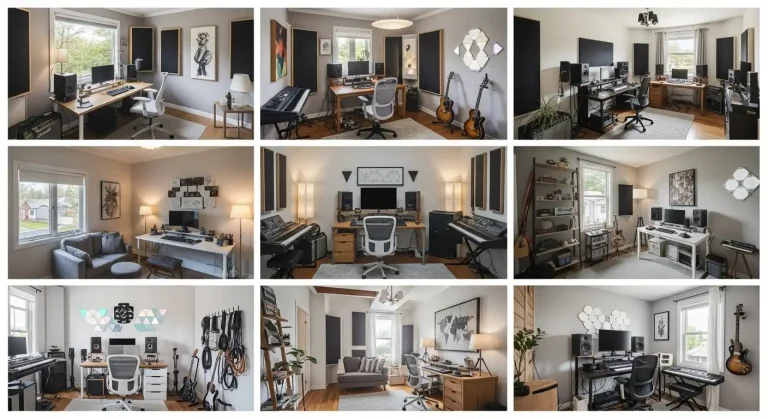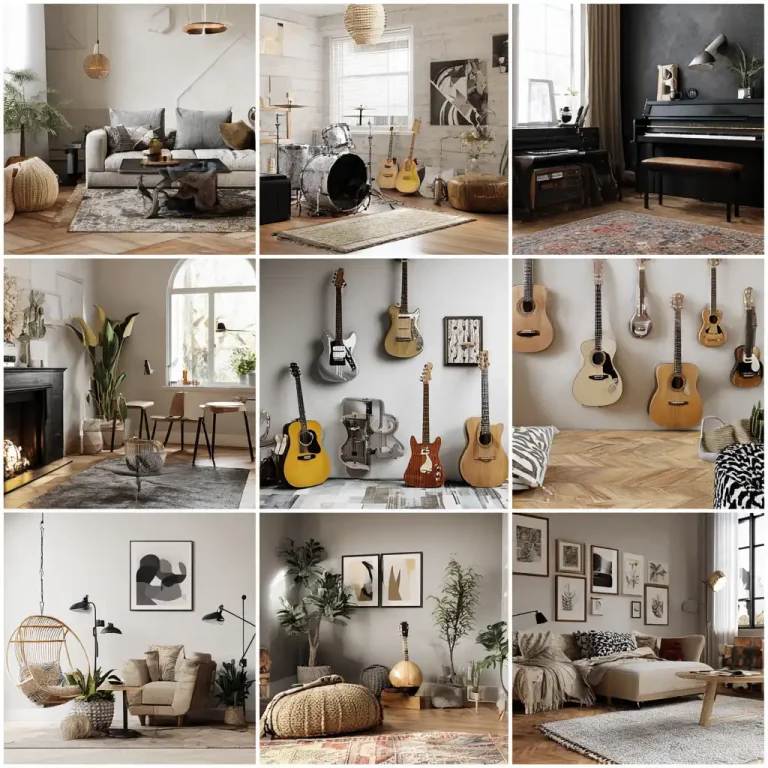

24 Music Lounge Room Ideas
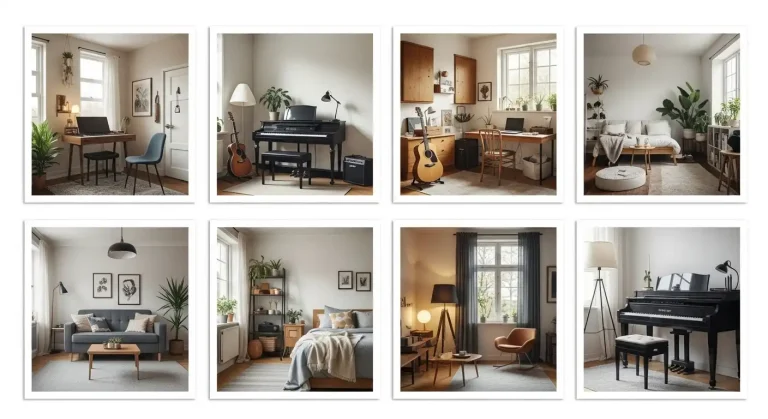
Designing a music lounge room gives you a space where comfort, creativity, and sound blend naturally. Whether you enjoy playing instruments, listening to vinyl, or hosting relaxed jam sessions, the right setup makes the room feel inviting and expressive. Good design helps you enjoy clear sound while keeping the space visually balanced. Every detail matters, from seating placement to lighting tone, wall textures, and storage for instruments. A music lounge should feel warm and personal without losing function. It should also support different moods—soft listening, focused practice, or casual gatherings with friends. With the following 24 music lounge room ideas, you’ll discover simple ways to shape a room that reflects your music taste and everyday lifestyle. These ideas stay budget-friendly, beginner-friendly, and easy to customize so your music lounge feels like a natural extension of your personality.
1. Build a Cozy Seating Zone
A comfortable seating area sets the tone for any music lounge. Use a mix of soft chairs, small couches, and floor cushions to make the room feel welcoming. Place seats near the main sound source without blocking the natural flow of the space. Choose fabrics that absorb sound slightly to reduce echoes and create a warm listening environment. Add small side tables to hold drinks, headphones, or remotes. Keep the layout simple so the room stays open for instruments or movement. Good seating encourages longer listening sessions and makes guests feel relaxed. You can adjust the space anytime by shifting cushions or moving chairs to match your preferred setup.

2. Set Up Ambient Mood Lighting
Lighting has a huge impact on your music experience. Warm lights help you unwind, while soft LED strips add character without overpowering the room. Use floor lamps, table lamps, or wall sconces to build layers of gentle light. Avoid harsh white lights as they create a cold feeling. Aim for a cozy glow that matches the vibe of a lounge. You can add sound-activated LEDs near shelves or around a display wall for a fun touch. Keep dimmers handy so you can shift the mood for practice sessions, nighttime listening, or social gatherings. Lighting should enhance the experience without distracting from the music.

3. Add a Vinyl or Media Display Corner
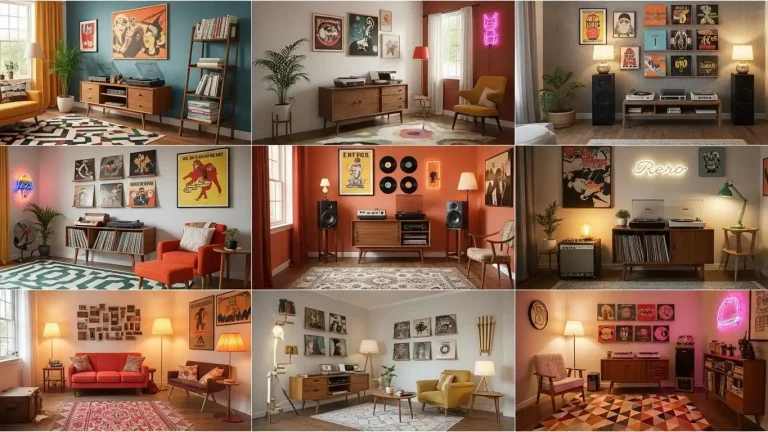
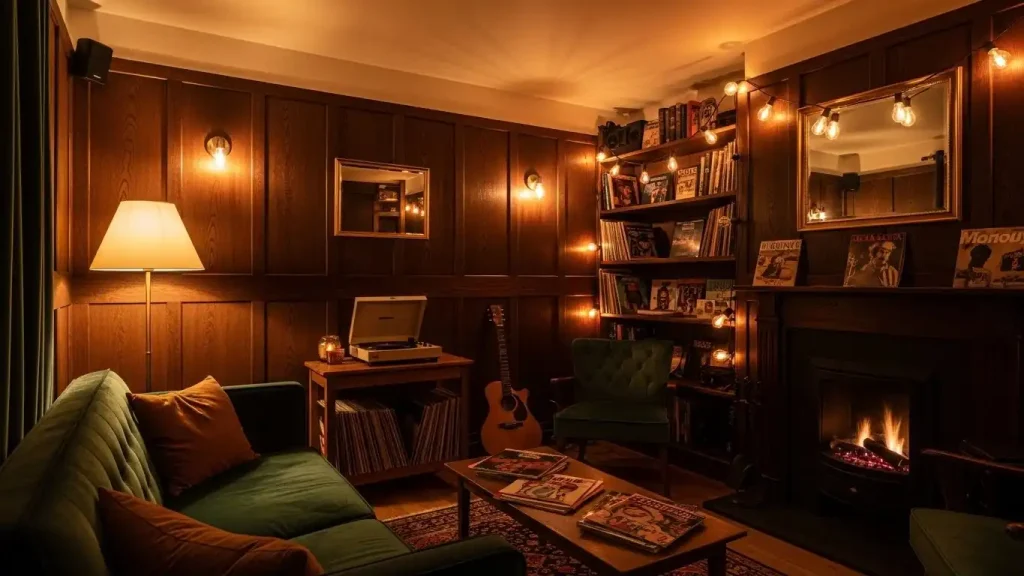
A display corner adds personality and gives your music lounge a curated look. Use floating shelves or cube storage to arrange vinyl records, CDs, or musical accessories. Keep your record player, speakers, or small amps nearby so everything stays organized. A well-designed display makes the room feel more intentional and encourages you to explore your collection more often. Add small décor pieces like candles, framed posters, or plants to soften the layout. Make sure the space is functional and easy to reach. Good organization keeps the lounge tidy and helps you enjoy your music sessions without searching for your favorite albums.

4. Use Layered Rugs for Warmth
Layered rugs help soften the room and improve sound comfort. A thick base rug absorbs footsteps and prevents sound from bouncing around the space. Add a smaller patterned rug on top to give the lounge a relaxed, artistic feel. Choose textures that match your music theme—bohemian patterns for indie vibes, clean lines for modern style, or earthy tones for acoustic settings. Rugs also help define a seating area without adding bulky furniture. If you like to sit on the floor during listening sessions, layered rugs add comfort and warmth. They also provide a budget-friendly way to refresh the room anytime with new colors or patterns.

5. Install Acoustic Wall Panels
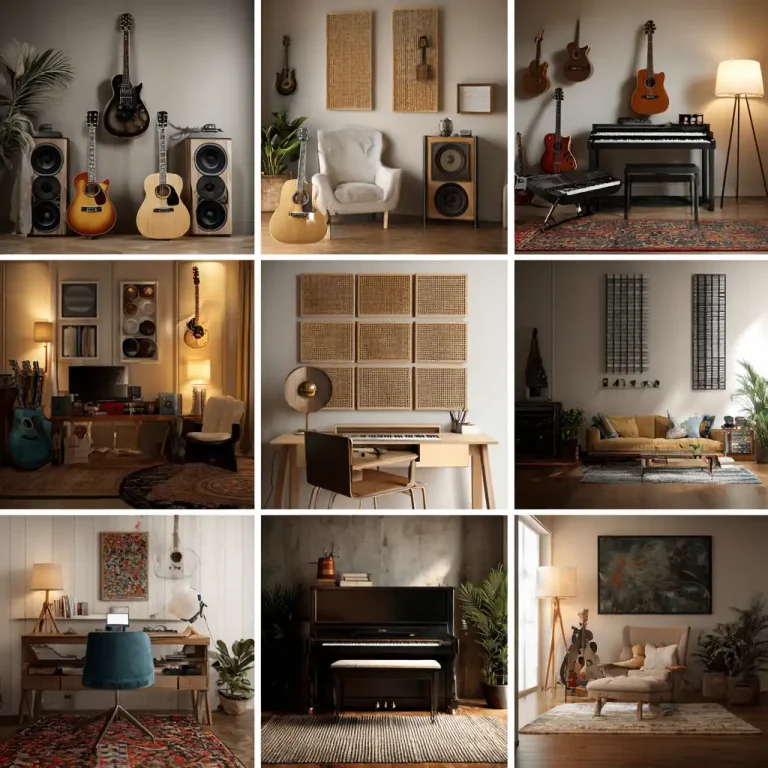
Acoustic panels improve the sound quality in your music lounge without making it look like a studio. Choose fabric-covered panels in colors that match your décor. Place them behind speakers, near corners, or across hard surfaces to reduce echo and create a balanced listening experience. Panels come in simple, stylish designs, so they blend into the space naturally. You can also make your own with wood frames and thick fabric for a personalized touch. Good acoustic treatment makes music sound clear and full, which creates a better environment for both listening and practicing without disturbing other rooms in your home.

6. Create a Lounge-Style Instrument Display
Instead of storing instruments in closed cases, display them as part of the décor. Use wall mounts for guitars, ukuleles, or small percussion pieces. Add a small stand for keyboards or a corner rack for violins. This approach keeps instruments accessible while giving the room a creative and relaxed look. Arrange them with intention so the space doesn’t feel cluttered. Displaying instruments also reminds you to practice more often and makes the lounge feel personal. Add soft lighting around the display to highlight textures and shapes. Keep cleaning supplies nearby so the instruments stay dust-free and ready to use.

7. Mix Vintage and Modern Furniture
Blending old and new furniture adds depth and character to your music lounge. Pair a sleek modern table with an older wooden shelf or combine a mid-century chair with a contemporary lamp. The mix keeps the room visually interesting without overwhelming the layout. Choose pieces that support comfort and function, such as a low coffee table for drinks or a compact bench for extra seating. Vintage elements bring warmth, while modern items keep the look fresh. This balance works especially well in music rooms where creativity flows easily. Keep the palette cohesive so the overall space feels connected.

8. Add Plants for a Relaxed Vibe
Plants bring natural energy into your music lounge and help soften sharp corners or empty areas. Choose low-maintenance indoor plants such as snake plants, pothos, or ferns. Place them near windows for natural light or use small pots on shelves to add detail. Plants also help with sound absorption, creating a calmer listening environment. If your room has limited light, consider using grow lights or choosing plants that thrive in shade. Mixing tall floor plants with small tabletop varieties keeps the space balanced. Greenery adds freshness to the room and pairs well with soft lighting and warm décor tones.

9. Use a Compact Coffee Table Setup
A coffee table gives the lounge a relaxing, social feel. Choose a small or medium-sized table that doesn’t crowd the seating zone. Use it to hold candles, small speakers, remotes, or books. Add a tray for organization so the table stays clean and functional. Look for designs that match your theme, such as rustic wood, metal frames, or minimalist glass tops. A good coffee table anchors the room and acts as a central point during listening sessions. Keep the décor simple so the surface remains useful for gatherings or quiet evenings.
10. Add Wall-Mounted Shelves for Music Storage
Wall-mounted shelves help you organize your music collection without taking up floor space. Use them for vinyl records, CDs, small speakers, or décor items that match your style. Floating shelves create a clean, open look while keeping everything within easy reach. Arrange items by color, genre, or size to give the wall a curated feel. You can also mix décor pieces with music accessories to make the display visually balanced. Choose sturdy brackets that can handle heavier items, especially if you store vinyl. Well-placed shelves turn your wall into a functional feature and keep your music lounge neat and inviting.

11. Create a Cozy Reading and Listening Nook
A small reading and listening nook adds a calm corner to your music lounge. Choose a deep, comfortable chair paired with a soft throw blanket and a side table. This setup gives you a place to unwind while enjoying your favorite songs or books. Add a small lamp for warm lighting, and place a plant nearby to soften the mood. Use a simple rug to define the space and make it feel separate from the rest of the room. A dedicated nook helps you escape distractions and fully enjoy the relaxing atmosphere of your music lounge.
12. Add a Low Seating Zone with Floor Cushions
Floor cushions bring a casual, intimate vibe to your music lounge. Choose oversized cushions or poufs in soft fabrics that match your décor style. Arrange them around a low table or near the speakers for comfortable listening sessions. This setup works well for gatherings, giving friends extra seating without crowding the room. Mix textures like faux fur, woven cotton, or velvet to make the space feel warm. Floor seating also keeps the layout flexible since you can move the cushions anytime. It’s a simple way to add comfort and personality while keeping the lounge open and airy.

13. Hang a Statement Art Piece
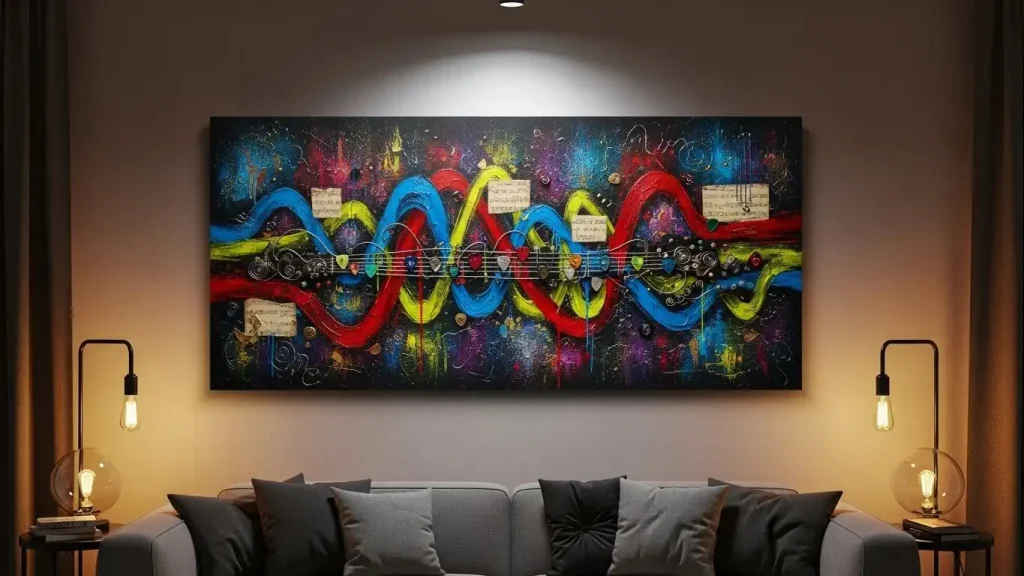
A bold art piece sets the tone for your music lounge. Choose artwork that reflects your taste—abstract prints, musical portraits, vintage posters, or hand-painted pieces. Position it above your sofa, behind your listening chair, or on a wall that needs visual interest. Large art helps anchor the space and gives the room a stylish focal point. Use a frame that matches your décor theme, such as wood for rustic charm or metal for a modern look. When paired with soft lighting, a statement art piece creates a warm and inspiring atmosphere perfect for relaxing with music.

14. Use Corner Shelving for Space Efficiency
Corner shelves help maximize unused areas and keep your lounge organized. Install one in a tight corner for storing headphones, small speakers, or decorative items. This type of shelving works well in small rooms where floor space is limited. Choose a design that blends with the rest of your furniture, like natural wood, metal brackets, or floating triangular shelves. Corner storage keeps clutter off main surfaces and adds a touch of creativity to the room. It’s also a great way to highlight unique décor pieces without overwhelming the layout.

15. Add Warm Ambient Lighting
Ambient lighting shapes the mood of your music lounge. Use warm bulbs, table lamps, LED strips, and dimmable lights to create a soft, inviting glow. Place lights behind furniture or along shelves to avoid harsh brightness. Layer different light sources for a deeper, more relaxing effect. Good lighting enhances textures, highlights décor, and improves the overall listening experience. It also helps you unwind and enjoy your music without strain. Choose fixtures that match your décor style to keep the space balanced and cohesive.

16. Introduce a Small Bar or Refreshment Cart
A small bar cart brings convenience to your music lounge. Use it to store drinks, snacks, coasters, and glassware. Choose a compact cart that fits the room without blocking movement. Place it against a wall or next to a sofa for easy access during gatherings or solo evenings. Add simple décor items like candles or small plants to soften the look. A bar cart makes the room feel social and welcoming while keeping refreshments organized. It’s a practical upgrade that enhances the overall atmosphere of the lounge.

17. Add a Decorative Partition for Zoning
A decorative partition helps separate different areas of your music lounge without closing off the space. Use a wooden screen, open shelf divider, or fabric panel to define the listening area. This approach works well in open rooms or studio apartments. A divider adds depth and structure while still allowing light to flow freely. Decorate it with plants, books, or music-related items for a personalized look. Zoning helps you create a more focused listening space and makes the lounge feel intentional and well-planned.

18. Use Soft Neutral Colors for a Calm Atmosphere
Soft neutral colors bring warmth and balance to your music lounge. Shades like beige, cream, light gray, and muted browns create a relaxing backdrop that pairs well with any décor theme. Neutrals help other elements stand out, such as instruments, artwork, and lighting. They also make the room feel open and airy. Add texture through rugs, pillows, and throws to keep the space from looking flat. A neutral palette makes the music lounge versatile and easy to update whenever you want a fresh look.
19. Add a Compact Workstation for Music Editing
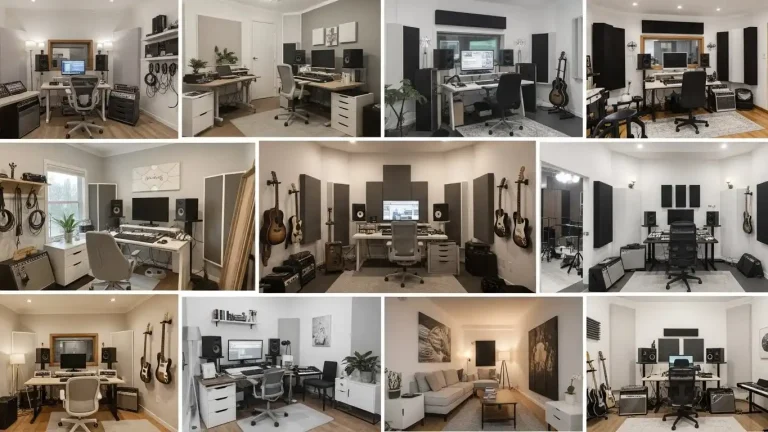
A small workstation helps you organize music projects without taking over the lounge. Use a slim desk paired with a comfortable chair and place your laptop, small speakers, or digital tools on top. Keep the setup minimal to avoid clutter. This corner is ideal for quick edits, playlists, or creative work. Add a small shelf above the desk for storage and keep cables tidy with simple organizers. A workstation brings function to the lounge and supports your music activities without disrupting the relaxing atmosphere.

20. Include a Gallery Wall of Music Memories
A gallery wall adds a personal touch to your music lounge. Use frames of different sizes to display concert tickets, favorite albums, signed posters, and personal photos. Arrange them in a balanced layout that fills the wall without looking crowded. A gallery wall tells your music story and gives the room emotional depth. Choose frames that match the décor style and mix horizontal and vertical pieces to keep the arrangement interesting. Soft lighting nearby brings the display to life.

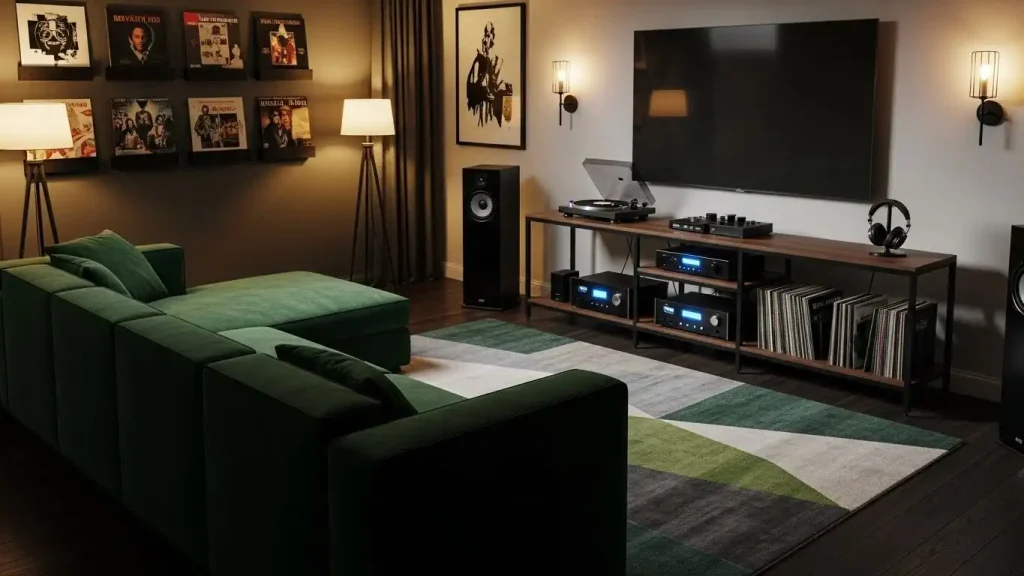
21. Add a Slim Media Console for Equipment
A slim media console keeps your speakers, amplifiers, and accessories organized. Choose a model with open shelves for ventilation and easy access to cables. Place it against a main wall to anchor the listening area. The console should match the room’s style and hold everything you need without feeling bulky. Add small décor items like candles or plants to soften the look. A neat media console improves the room’s flow and keeps your equipment safe and accessible.
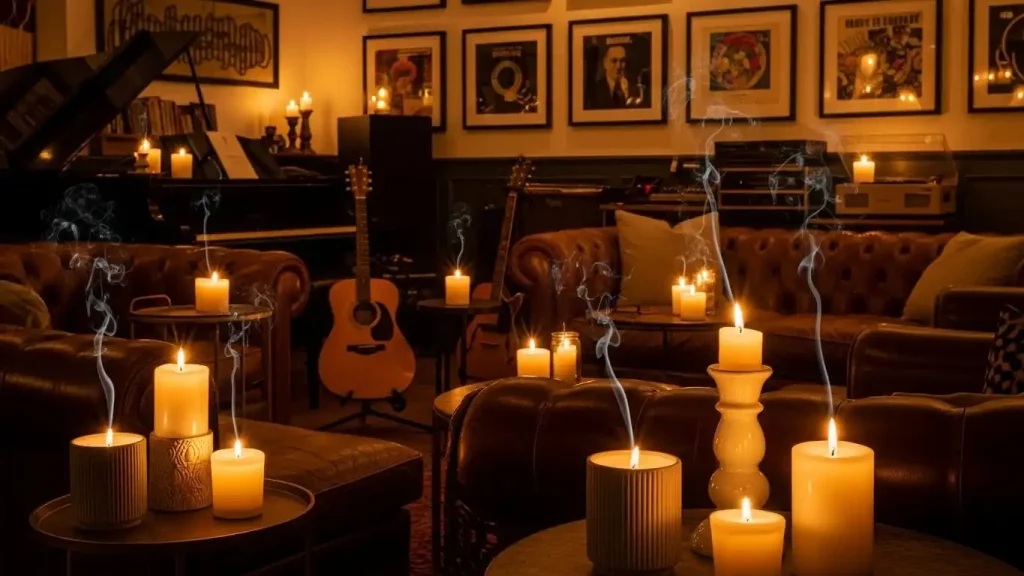
22. Use Calming Scented Candles
Scented candles help set the mood for your music lounge. Choose warm scents like vanilla, amber, sandalwood, or cedarwood to create a peaceful environment. Place candles on shelves, tables, or around seating areas. Use simple jars or decorative holders to match your décor. Candlelight pairs well with warm lamps and soft music, making every listening session more enjoyable. Rotate scents to match seasons or your mood. Candles also add a comforting glow that enhances the lounge’s relaxing feel.

23. Add Comfortable Throw Blankets
Throw blankets add warmth, texture, and style to your music lounge. Choose soft fabrics like cotton, fleece, or knitted wool. Fold them neatly over sofas, chairs, or baskets so they’re easy to grab during cozy evenings. Pick colors that match your palette to keep the room visually balanced. Throws help soften furniture and make the space feel more welcoming. They also add subtle layers that improve the overall atmosphere. A few well-chosen blankets can transform the lounge into a restful, inviting place for music and relaxation.

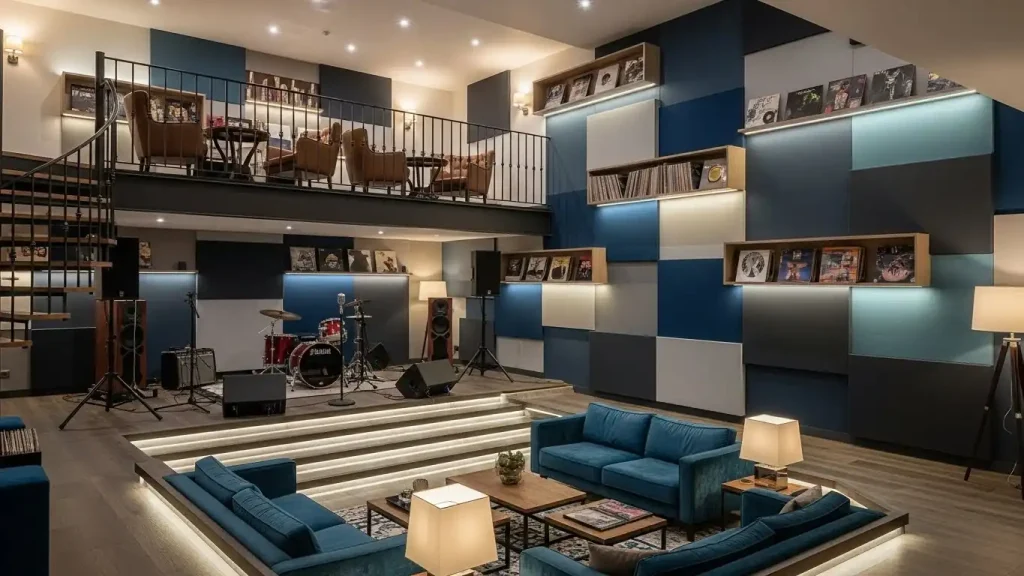
24. Use Multi-Level Décor for Depth
Multi-level décor adds visual interest and prevents the room from feeling flat. Mix décor items of different heights, such as tall lamps, medium-sized plants, and smaller accessories. Use shelves, tables, and stands to create layers. This approach makes the lounge look more polished and gives the room dimension. Choose items that match the overall theme so everything feels connected. Multi-level décor works well with soft lighting and neutral colors, creating a warm and inviting atmosphere perfect for music listening.
Conclusion
A music lounge room gives you a dedicated space to relax, enjoy your favorite songs, and display your personal style. Using these 24 ideas, you can create a room that feels warm, balanced, and creative. From lighting and color choices to smart storage and comfortable seating, each detail helps shape the atmosphere. The goal is to build a space that supports both quiet listening and social gatherings. A thoughtful combination of décor, sound comfort, and personal touches makes your music lounge feel complete and inviting.
FAQs
1. How can I create a music lounge in a small room?
Use vertical storage, compact seating, and soft lighting to make the room feel open. Choose multi-purpose furniture to save space.
2. What colors work best for a relaxing music lounge?
Soft neutrals, warm browns, muted greens, and grays create a calm environment that works with any décor theme.
3. How do I improve sound quality in my lounge?
Add rugs, curtains, acoustic panels, and soft furniture. These elements reduce echo and make music sound fuller.
4. What décor items complement a music-themed room?
Instruments, vinyl displays, concert posters, plants, and layered rugs enhance the look without overwhelming the space.
5. How do I choose lighting for a music lounge?
Use warm, dimmable lights, LED strips, and soft lamps to create a cozy and inviting mood.
Visit More Ideas : www.dreamyhomesdecor.com